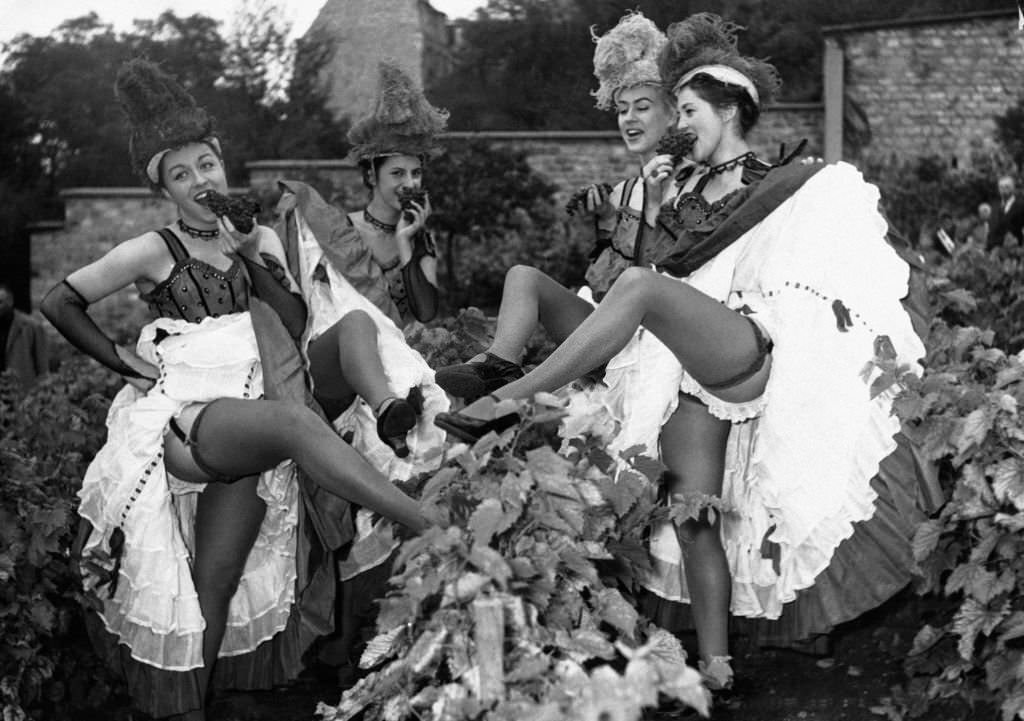
Laughter and theater meet the vineyard in this lively Montmartre scene, where French cancan dancers pause mid-pose to sample dark clusters of grapes. Their high-kicking stance is held like a practiced flourish, skirts lifted to reveal layered petticoats and stockings, while feathered headpieces and fitted bodices keep the look unmistakably cabaret. Even at rest, the performers project the same bold energy that made the cancan a symbol of Parisian nightlife.
Behind the playful tasting ritual sits a tangible harvest setting: dense vine leaves fill the foreground, and a stone wall and buildings anchor the background with a sense of old Paris. The juxtaposition is part of the charm—stage glamour transported outdoors, as if the city’s most famous dance has wandered into a rustic festival tableau. The women’s expressions and casual bites of fruit soften the performance into something closer to candid celebration.
Montmartre in the 1910s was famous for blending popular entertainment, fashion, and street culture, and the photograph leans into that mix with irresistible clarity. It sells the cancan not only as a physically demanding dance but as a brand of Parisian joie de vivre—costume, gesture, and spectacle distilled into a single moment. For anyone searching the history of the French cancan, Belle Époque-era style, or Paris harvest festivities, this image captures how public celebration and cabaret culture could overlap in the same frame.