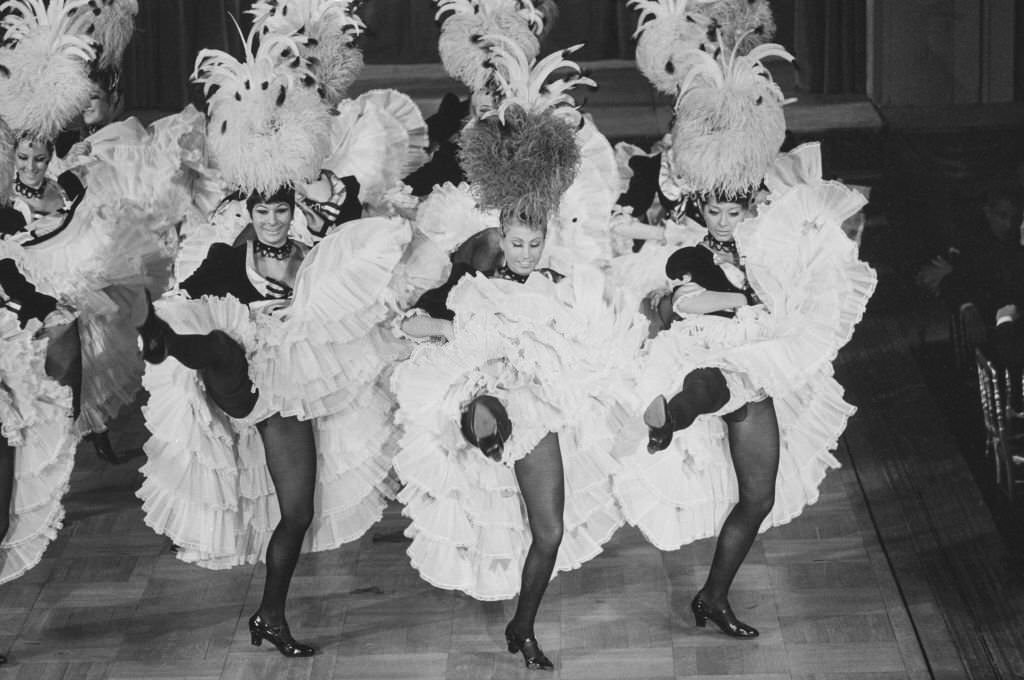
Feathers explode upward like fountain spray as a line of cancan dancers hits the stage at the Bal Tabarin, their headdresses towering above smiles set for the spotlight. Ruffled skirts billow into bright, layered crescents, caught mid-swing so the fabric itself seems to dance. Dark bodices, chokers, and sleek stockings sharpen the contrast, turning the performers into a synchronized pattern of black and white motion.
At the center, high kicks and bent knees lock into the familiar rhythm of the French cancan, a style built on stamina as much as showmanship. The choreography reads in the details: the lifted heels, the forward thrust of the leg, the grip on a skirt to frame the movement, and the tight spacing that keeps the chorus line unified. Even without hearing the music, the photograph suggests the percussion of shoes on the floor and the breathless pace that made Parisian cabaret famous.
Taken in 1966, just before the venue’s final closing, the scene carries an unspoken sense of curtain-call grandeur—one more flourish for a storied nightclub and its emblematic dance. Bal Tabarin had long traded in spectacle, and the cancan’s mix of discipline and daring became shorthand for French nightlife, Montmartre fantasy, and postwar entertainment culture. As a piece of Paris history, the image preserves not only a performance but the era’s cabaret fashion, stagecraft, and the enduring myth of the French cancan.