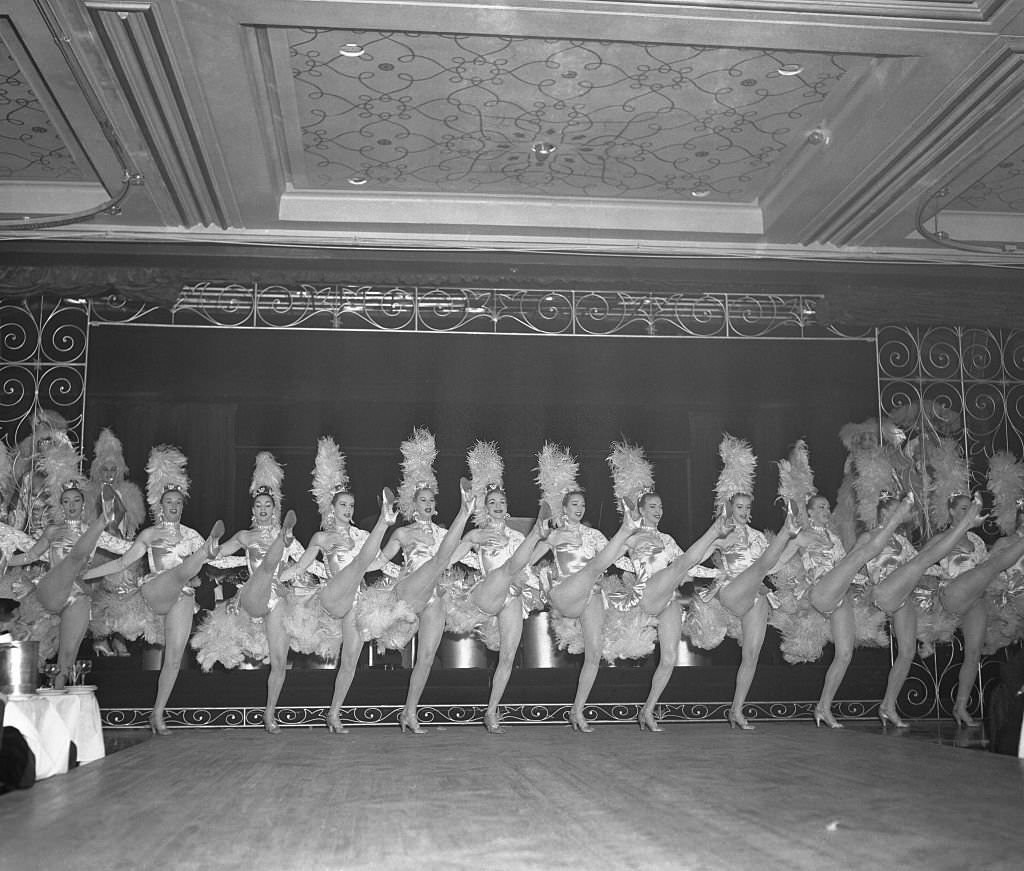
A chorus line of cancan dancers rockets across the stage at the Latin Quarter in New York City, frozen mid-kick in 1957. The performers hold a crisp, synchronized pose—arms lifted, legs extended high—while feathered headdresses and ruffled skirts amplify every motion. Even in a still frame, the routine reads as pure momentum, the cancan’s trademark mix of athleticism and showmanship.
Behind them, ornate ironwork curls along the proscenium and a patterned ceiling hovers overhead, framing the nightclub as a carefully designed spectacle rather than a simple dance floor. The lighting and deep stage backdrop push the dancers forward, turning their bright costumes and confident expressions into the focal point. A glimpse of a table at the edge of the room hints at the audience experience: dinner, drinks, and a front-row view of big-city nightlife.
In the context of mid-century entertainment, this scene speaks to how the cancan was packaged for American nightclub culture—glamorous, disciplined, and deliberately high-energy. The Latin Quarter name evokes a Parisian fantasy, yet the setting is unmistakably New York: a place where international styles were reinterpreted as polished revue. As a piece of fashion and culture history, the photo preserves an era when feather, satin, and precision choreography sold the promise of an unforgettable night out.