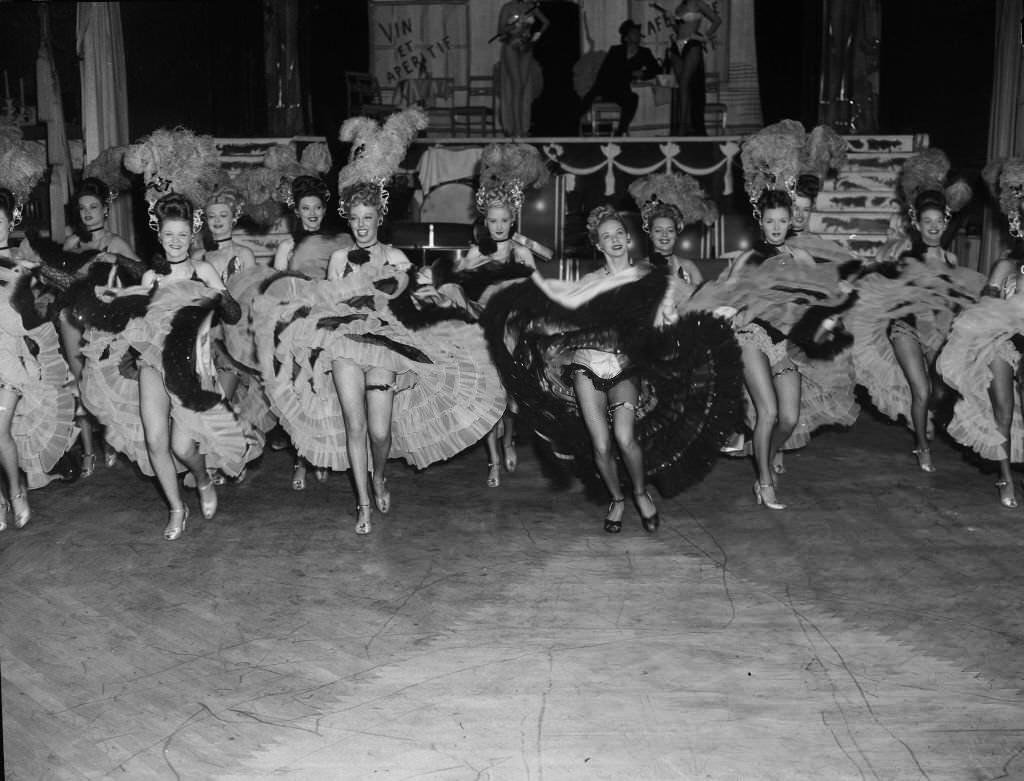
A chorus line of French-style can-can dancers surges toward the camera, skirts lifted into dramatic arcs that reveal layers of ruffles and flashes of stockings. Feathered headdresses and fitted bodices amplify the spectacle, while a central performer in a darker costume anchors the symmetry of the formation. The synchronized kicks and wide, swirling fabric capture the can-can’s famous blend of flirtation, athleticism, and precision.
Behind the dancers, a raised bandstand and decorative stage elements suggest a lively nightclub or cabaret setting, with musicians poised to drive the tempo. Even in a still frame, the scene feels noisy and fast, the dancers’ expressions set in confident performance smiles as they hold their timing. The polished floor and theatrical lighting underline how carefully such revues were staged to create an illusion of effortless exuberance.
Dated to 1950, the photograph sits in a postwar era when popular entertainment leaned into glamour and escapism, and the can-can remained an enduring symbol of Parisian-style nightlife. Costuming details—feathers, lace, and high-contrast skirt panels—reflect mid-century showgirl fashion designed to read from the back of the room as well as in publicity images. For fashion and culture history, it offers a vivid look at how the can-can was packaged for modern audiences: traditional in silhouette, contemporary in scale, and unapologetically energetic.