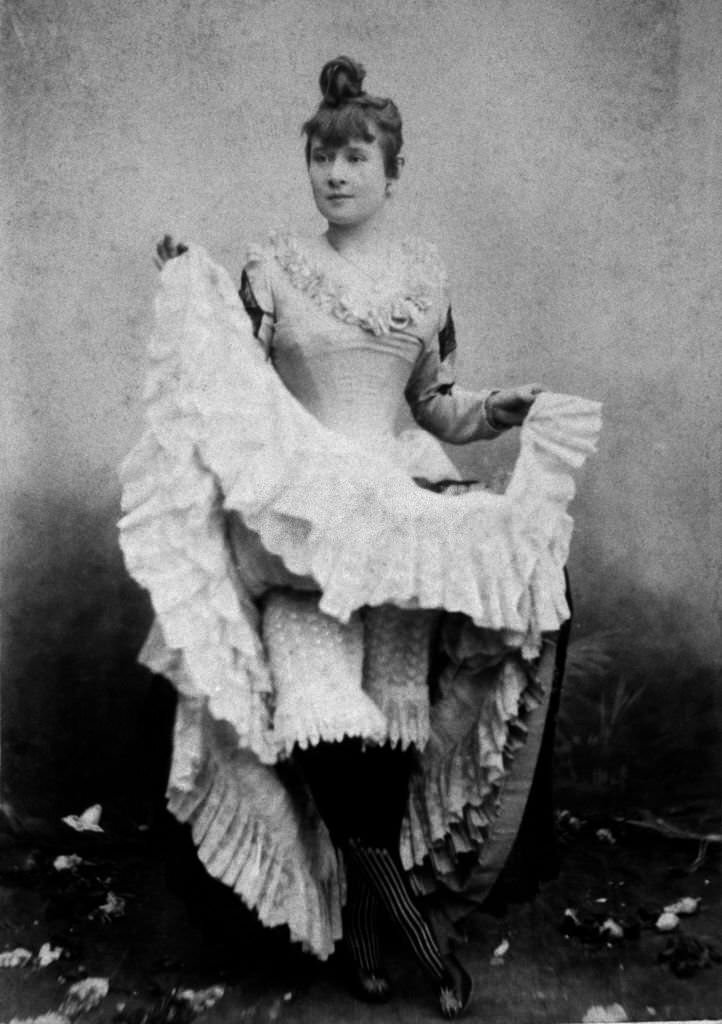
Poised against a plain studio backdrop, La Goulue stands mid-flourish, lifting the frothy layers of her cancan skirt as if the music has only just paused. The ruffles billow outward in a theatrical arc, framing her corseted bodice and creating the sense of motion that made Parisian dance halls famous. Her calm, direct gaze contrasts with the exuberance of the costume, suggesting a performer fully in command of the spectacle.
Details in the outfit speak to the cancan’s blend of flirtation and athleticism: striped stockings, heeled boots, and a skirt designed to be grasped, snapped, and tossed during high kicks and fast turns. The fitted waist and decorative trim place the portrait squarely in late 19th-century fashion, where stage wear borrowed from contemporary style while exaggerating it for the spotlight. Even in a still photograph, the layered fabric and lifted hemline hint at the physically demanding choreography behind the era’s nightlife glamour.
Paris in the 1890s fed a hunger for modern entertainment, and star dancers like La Goulue became symbols of Montmartre’s cabaret culture and its bold, consumer-driven image of pleasure. Studio portraits such as this one functioned as early publicity—collectible, shareable, and instantly recognizable in silhouette—helping fix the cancan in popular memory. As a piece of fashion and cultural history, the photograph offers a vivid window into how performance, celebrity, and costume shaped the mythology of fin-de-siècle Paris.