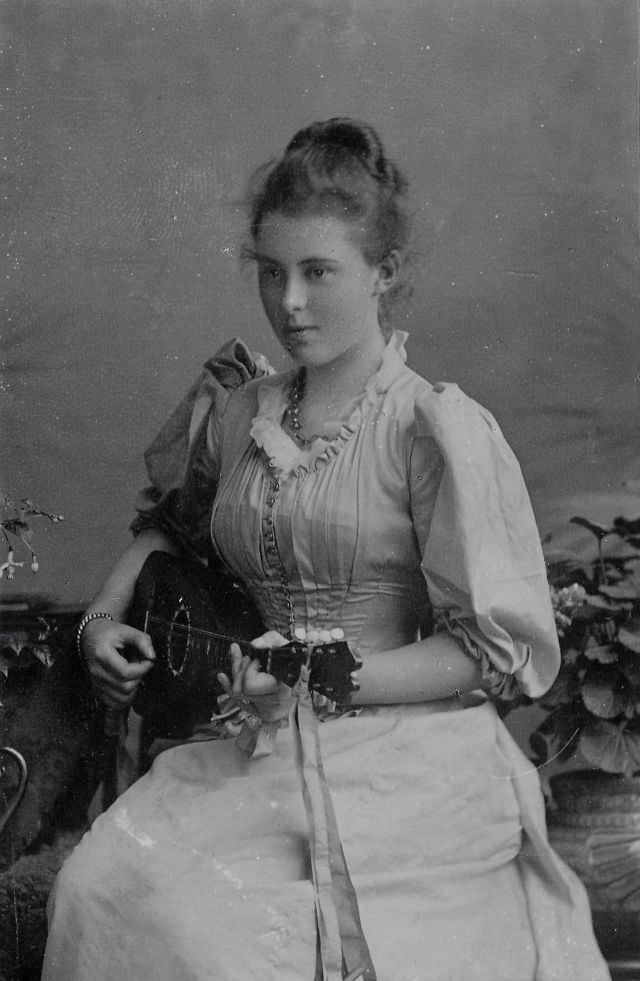
Seated in a studio setting with painted scenery and a suggestion of greenery, a young Victorian-era woman holds a guitar across her lap, her posture composed and her gaze steady. Her hair is arranged up and away from the face in a soft, practical style, while a small necklace and bracelet add restrained sparkle. The overall mood is formal yet intimate, the kind of carefully arranged portrait meant to present refinement and calm self-possession.
What stands out most is the silhouette shaped by a tight corset beneath the bodice: a narrowed waist, smooth fitted lines, and a front fastening that emphasizes symmetry and control. Puffed sleeves and a high, ruffled neckline balance the look, pairing softness with structure in a way that became emblematic of late 19th-century women’s fashion. Even without color, the photograph reveals texture—gathers at the chest, crisp seams, and the matte sheen of well-kept fabric—showing how undergarments quietly governed the fall of every outer layer.
Corsetry was more than a trend; it was an indispensable foundation garment that signaled respectability and adherence to contemporary ideals of beauty and discipline. Portraits like this helped fix those ideals in public imagination, blending domestic accomplishments—music, poise, tasteful adornment—with the engineered hourglass form. For readers interested in Victorian clothing history, women’s undergarments, and late 19th-century fashion culture, the image offers a vivid reminder that the era’s elegance often began with what was worn underneath.