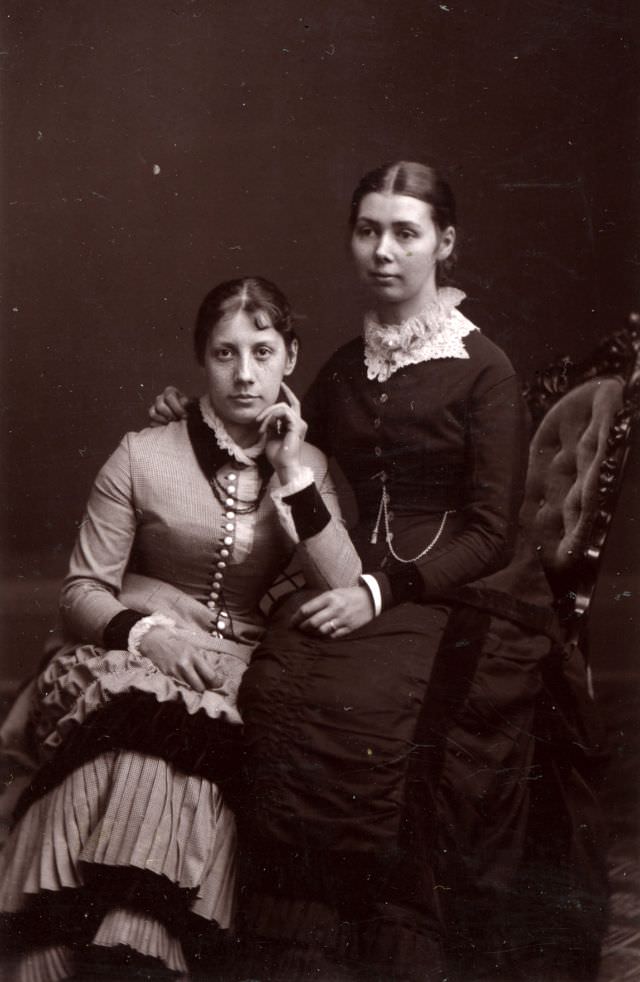
Two Victorian-era women pose in a studio portrait with the measured calm of late 19th-century photography, their bodies angled toward one another in a quiet display of familiarity. One sits with her hand at her cheek while the other stands close, a gentle arm resting at her companion’s shoulder, both framed by a dark backdrop that emphasizes faces, collars, and careful tailoring. The soft focus and faint surface specks of the print add to the period atmosphere, reminding viewers of the fragile material life of old photographs.
Attention falls quickly to their fashion: fitted bodices, high necklines, and crisp lace collars that signal respectability while revealing the era’s obsession with silhouette. The tightly laced corset—an indispensable undergarment in Victorian clothing—shapes the waist beneath structured fabric, creating the long, controlled line prized in women’s dress. Buttons, cuffs, and a pocket-watch chain-like detail provide small points of shine and precision, turning everyday garments into a statement about discipline, taste, and social standing.
Beyond style, the image speaks to the culture that made corsetry both commonplace and contested, celebrated as proper support yet criticized for restriction. Studio portraits like this one were not merely records of appearance; they were performances of identity, where posture, clothing, and closeness communicated ideals of femininity and decorum. For anyone searching Victorian fashion history, corset photography, or late 19th-century women’s clothing, this portrait offers an intimate window into how beauty standards were literally built into the garments of the age.