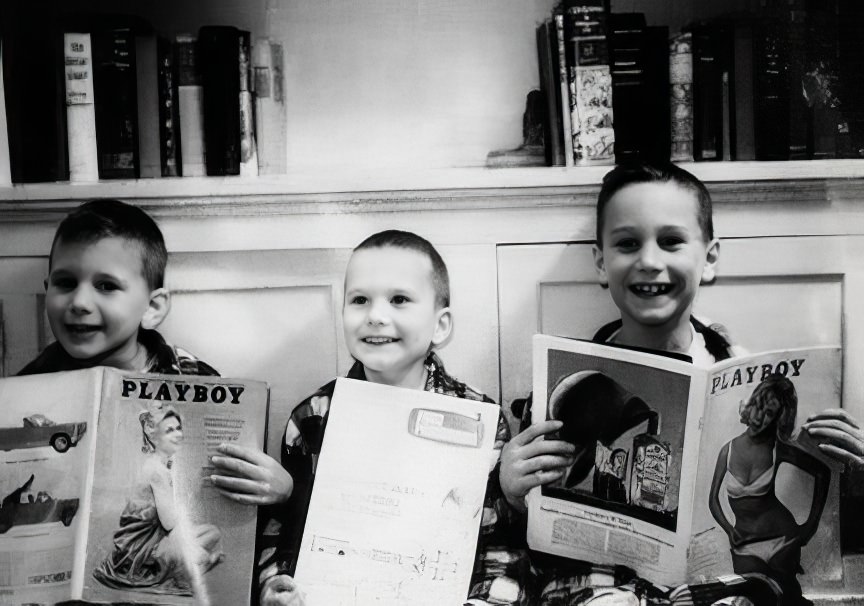
Three boys sit shoulder to shoulder beneath a shelf of hardback books, grinning as they hold oversized magazines like they’ve just discovered a very grown-up secret. The scene leans into playful mischief: pajamas, a cozy interior, and the exaggerated seriousness of “reading” material that’s clearly beyond their years. That contrast—childlike innocence paired with adult print culture—is exactly the sort of visual punchline that makes humorous vintage photographs so irresistible.
The word “PLAYBOY” is plainly visible on the covers, and the children’s delighted expressions turn the moment into a neatly framed joke about curiosity and imitation. Whether the picture was staged for laughs or caught at just the right instant, it works because it feels true to everyday family life: kids copying what they see, using props too big for their hands, and performing adulthood with all the confidence childhood allows. Details like the tidy wall paneling and the book spines above them quietly anchor the humor in a recognizable domestic setting.
Humor in history often lives in these small contradictions, where the camera preserves a prank, a wink, or a family gag that outlives its original audience. For readers browsing vintage comedy, retro oddities, or classic funny photos, this image offers more than a quick laugh—it’s a snapshot of changing attitudes toward media, childhood, and what counts as “forbidden” or “sophisticated.” Set alongside other amusing archival finds, it reminds us that the past wasn’t only solemn; it also knew how to grin at itself.