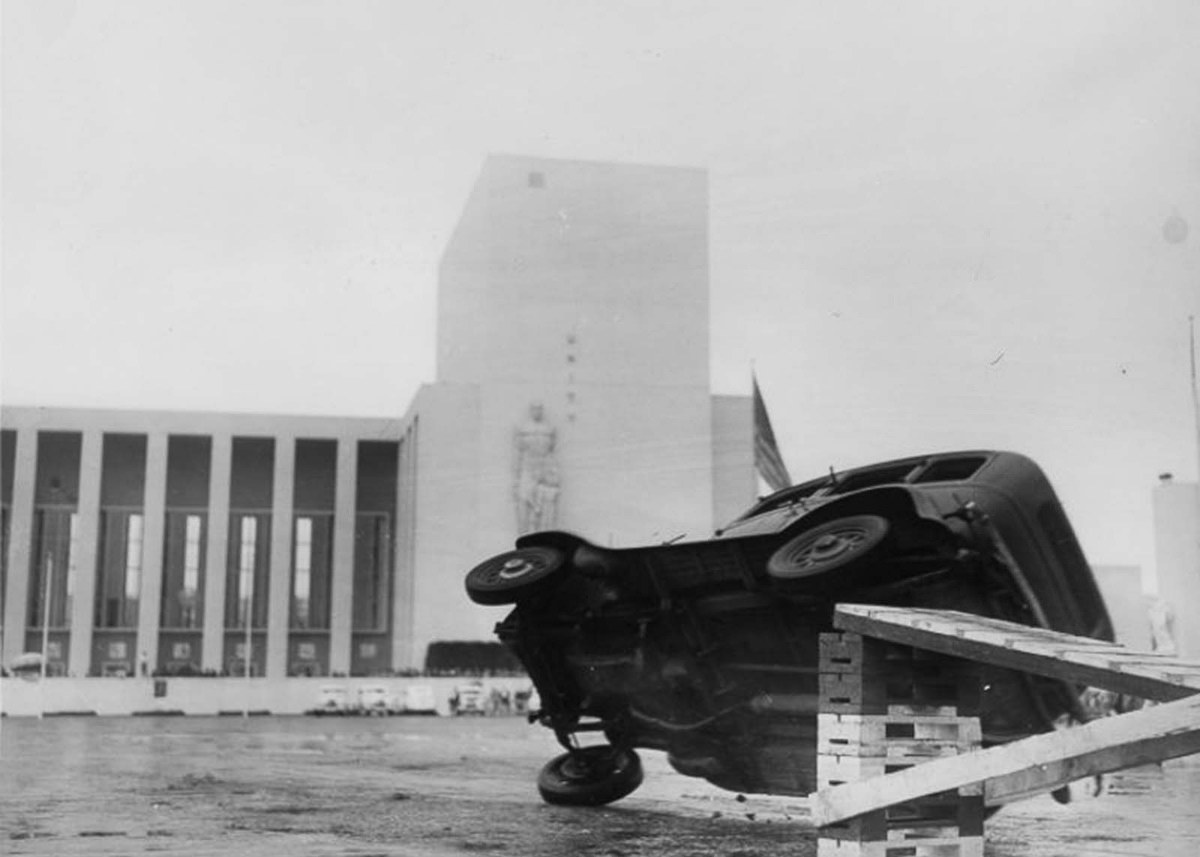
Metal, motion, and a carefully staged moment of chaos fill the frame as an automobile lies overturned at the end of a makeshift wooden ramp. The car’s undercarriage and wheels face the sky, suggesting a deliberate flip rather than an ordinary wreck, while the open lot and looming modern building in the background heighten the sense of spectacle. It’s the kind of frozen instant that lets you hear the imagined roar—engine, impact, and the crowd’s collective gasp.
In the 1940s, Jimmie Lynch and his “Death Dodgers” became part of a popular strain of American sports entertainment that blended driving skill with daredevil showmanship. Their performances leaned on precision as much as risk: ramps, timed approaches, and controlled crashes that turned everyday automobiles into props for thrills. The photo hints at that balance between choreography and danger, where a split-second miscalculation could turn a planned stunt into a disaster.
For today’s viewers, the image works as a vivid portal into mid-century car culture, when stunt driving and crash exhibitions drew families to fairgrounds and public events. It also invites a closer look at the era’s fascination with speed and durability—how machines were tested not just on roads, but in front of grandstands as proof of nerve and ingenuity. If you’re searching for 1940s sports history, vintage stunt driving, or the story of Jimmie Lynch’s Death Dodgers, this photograph delivers the drama in one stark, unforgettable scene.