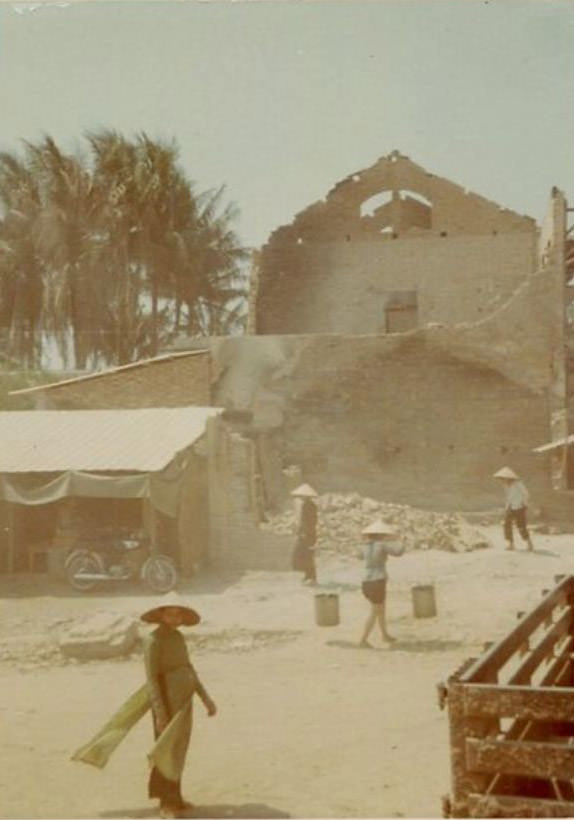
Sunlight washes over a street scene dominated by a large building left hollowed out by bomb damage, its upper walls still standing while the roof and interior have collapsed into a rough mound of rubble. The broken gable line and jagged openings read like a silhouette of what used to be solid masonry, now reduced to fragments and dust. In the foreground, everyday movement continues—figures in traditional conical hats cross the road, and a small structure with a tarp-like roof and a parked motorcycle hints at makeshift commerce or shelter beside the wreckage.
Believed to have been taken in the city of Huế during the Vietnam War, the photograph holds that uneasy balance between destruction and routine. Palm fronds rise behind the ruins, softening the background while emphasizing the tropical setting, and the pale haze suggests heat, dust, or smoke lingering after nearby blasts. Without resorting to dramatic staging, the scene conveys how urban spaces were reshaped—walls became landmarks, debris turned into barriers, and daily errands unfolded in the shadow of sudden loss.
For readers searching Vietnam War history, Huế war damage, or wartime urban ruins in Vietnam, this image offers a grounded look at what conflict leaves behind: not only shattered architecture but the quiet persistence of civilian life. The composition draws the eye from the street-level figures to the broken facade, a visual reminder that wars are recorded in both buildings and bodies moving through them. It is a stark, unadorned document of a moment when a city’s built environment—and the lives threaded through it—had to adapt to devastation.