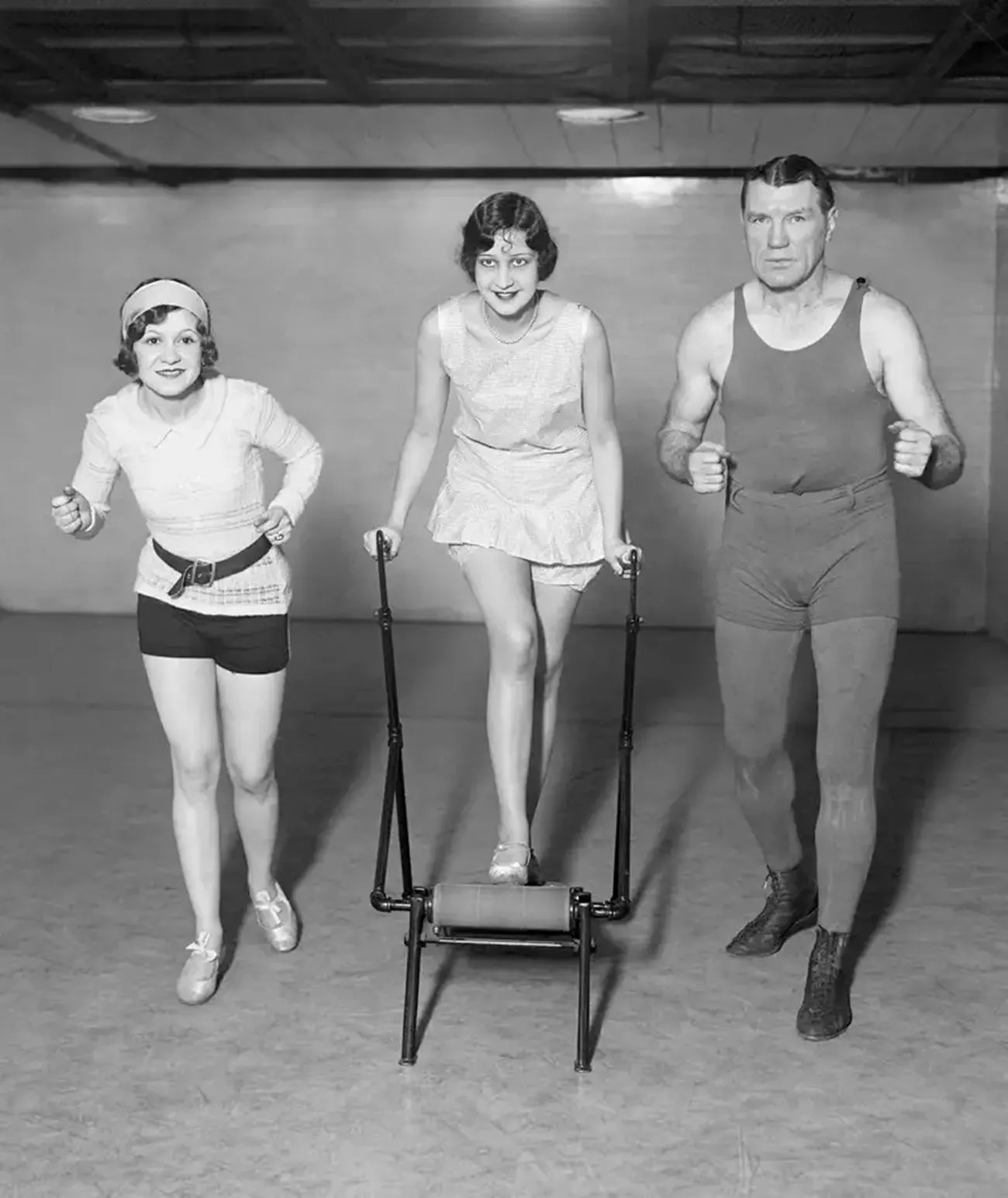
Between the bright studio lighting and the plain gym-like backdrop, the 1928 “running machine” looks both futuristic and faintly theatrical. Three athletes pose mid-stride: a woman in the center steps onto a compact roller platform while gripping upright handles, flanked by two companions who mimic a jog in place. Their period workout outfits—headband, sleeveless tunic, and fitted athletic wear—place the scene firmly in the late 1920s fascination with modern bodies and modern methods.
At the heart of the photograph sits the device itself, a simple frame with a single rolling cylinder underfoot, suggesting an early attempt to bring running indoors without needing a full track. The handholds hint at balance and control, as if the machine promised a “safe” way to practice form, build stamina, or demonstrate fitness for the camera. Even without visible branding, the design speaks to the era’s love of mechanical solutions for everyday challenges, including exercise.
Fitness culture didn’t begin with treadmills and wearable tech, and this image is a vivid reminder of how inventive—and sometimes odd—workout equipment could be. For readers searching for weird exercise machines from the past, 1920s sports history, or early home gym ideas, this photo offers an irresistible snapshot of experimentation in motion. It also raises an enduring question: were these contraptions meant for serious training, public spectacle, or simply the thrill of trying something new?