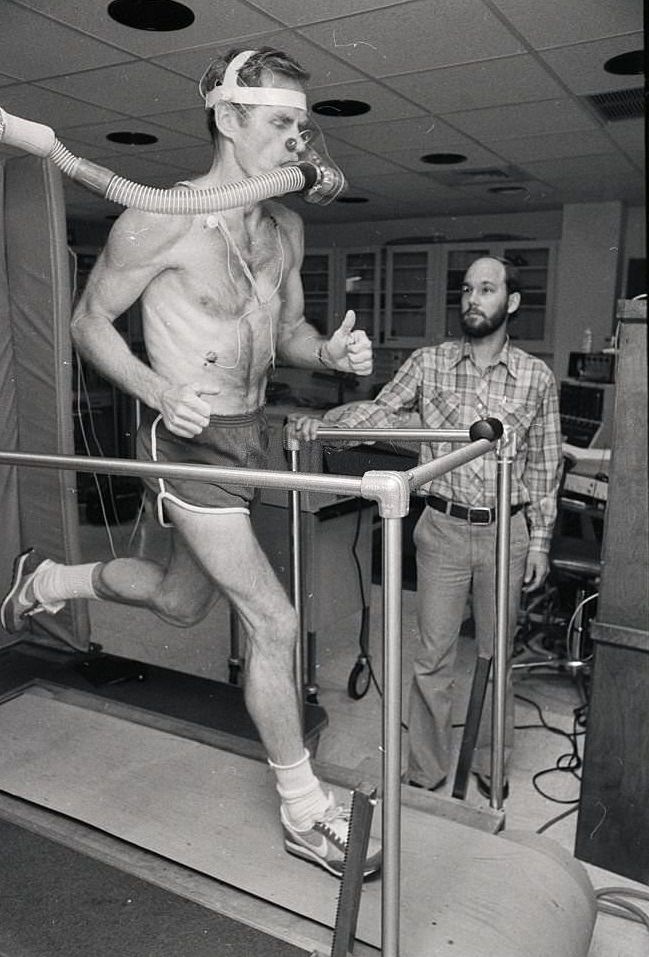
Inside a lab-like room, a runner pushes through a treadmill session while tethered to a bulky breathing mask and corrugated hose, turning a simple workout into a controlled experiment. Wires and sensors trail from his torso, suggesting careful monitoring as he keeps his stride steady, eyes forward, fists lightly clenched. The scene has the unmistakable feel of early exercise science: part athletics, part engineering, and entirely focused on what the body can endure.
A technician stands close by behind the safety rail, watching the readouts and the runner’s form with the calm attention of someone collecting hard data rather than cheering a personal best. The title’s emphasis on measuring oxygen use points to a classic fitness test—an attempt to quantify aerobic capacity by analyzing breathing under load. It’s a reminder that before wearables and smartphone apps, endurance was tracked with tubes, cables, and meticulous observation.
Odd as the apparatus looks today, this moment sits at the crossroads of sports history and medical research, when laboratories began translating effort into numbers coaches and clinicians could use. For readers searching for weird exercise machines from the past, treadmill oxygen testing is a standout example: familiar equipment made strange by the science wrapped around it. The photograph preserves that transitional era, when the modern obsession with VO₂ and performance metrics was literally being built, breath by measured breath.