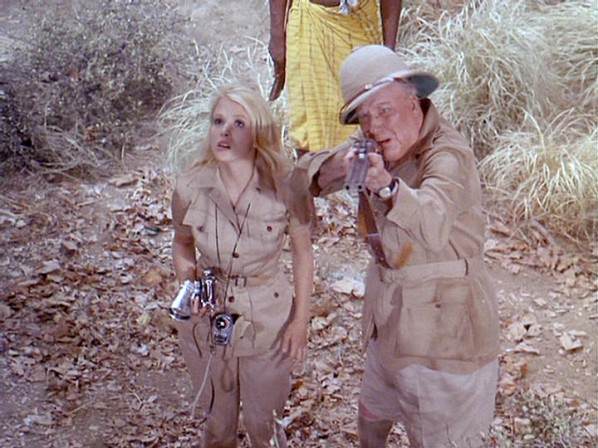
Joyce Jillson appears in a tense outdoor moment from *The Man from U.N.C.L.E.*, framed in that unmistakable mid-century adventure style where danger could erupt in the middle of a dusty trail. Dressed in a belted safari outfit and clutching a camera, she looks upward with a mix of alarm and curiosity, as if the next clue—or the next threat—has just revealed itself. The color still carries the period’s warm palette: sun-bleached brush, dry leaves underfoot, and utilitarian costuming that instantly signals “expedition” to any classic TV fan.
Alongside her, an older man in a pith helmet raises a rifle, aiming off-frame and heightening the scene’s suspense. The staging leans into familiar spy-TV tropes—on-location peril, improvised field gear, and a narrative that suggests secret operations far from headquarters. Even without dialogue, the composition tells a story: Jillson’s camera implies documentation or deception, while the armed escort hints at an unseen adversary just beyond the edge of the frame.
Fans often remember *The Man from U.N.C.L.E.* for its slick charm, but the post title points to an episode that earned a rough reputation, making this still a fascinating artifact of the series’ riskier creative swings. It’s a snapshot of how 1960s television blended espionage, pulp adventure, and sometimes uneven storytelling into a weekly spectacle. For collectors and classic TV historians, images like this preserve the atmosphere of the era—costumes, props, and performance beats that continue to fuel nostalgia and debate in Movies & TV circles.