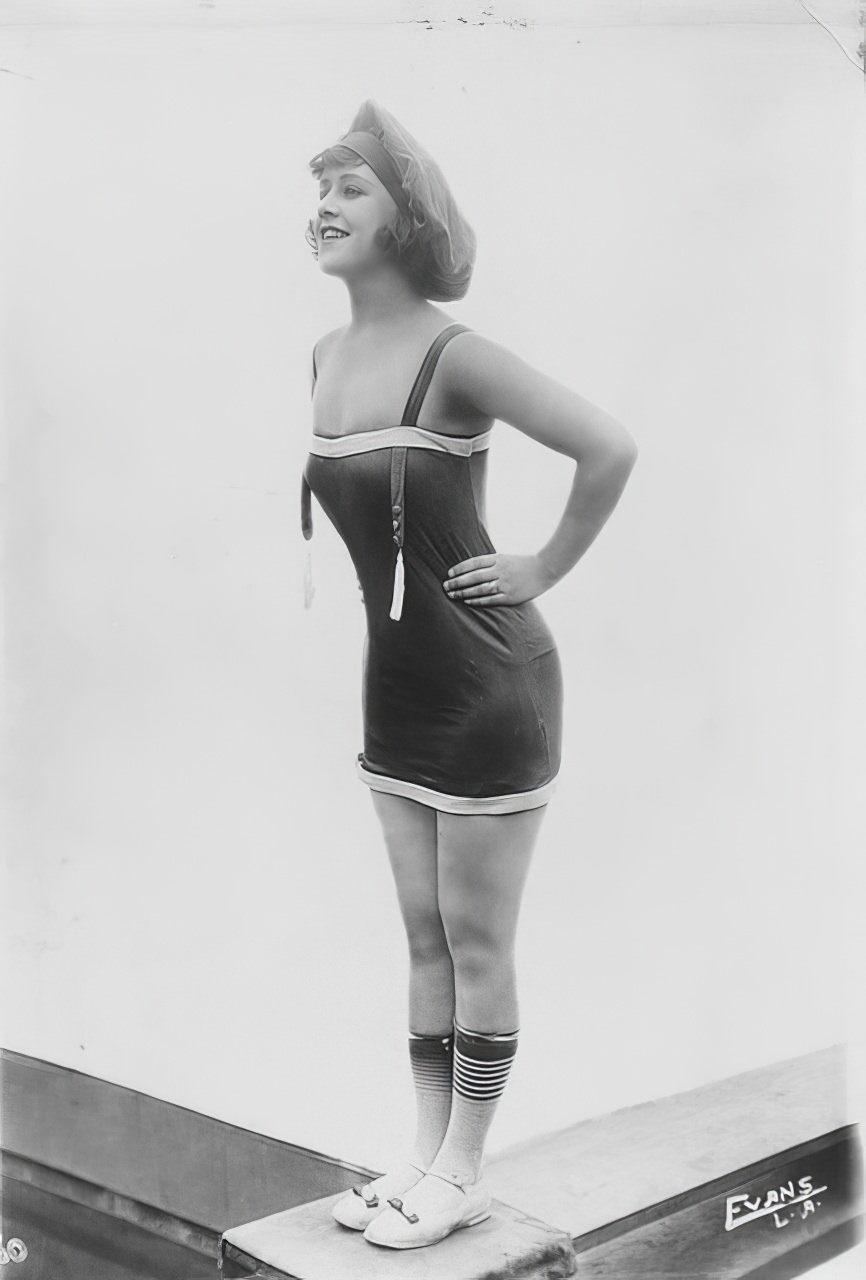
Poised on a simple platform, a smiling young woman models an early 1900s bathing costume that feels both sporty and carefully composed. The suit’s straight, dress-like silhouette, bold contrasting trim, and buttoned detailing suggest a moment when swimwear was beginning to flatter the figure while still signaling modesty. With a snug cap over a short bob and hands set confidently at her hips, she embodies the era’s emerging “bathing beauty” ideal—photogenic, modern, and ready for the seaside.
What stands out is how much of this outfit is about function as well as fashion: sturdy shoulder straps, a hem that falls like a tunic, and knee-high socks paired with practical shoes. Compared with earlier beach attire that could resemble everyday clothing, this design reads as purpose-built for recreation, yet still governed by social expectations about coverage and propriety. The clean studio-style backdrop keeps attention on the garment’s lines and textures, turning swimwear into a statement of contemporary style rather than mere seaside necessity.
“The Bathing Beauties of Early 1900s” uses photographs like this to trace the gradual shift from layered, restrictive bathing outfits to sleeker, more body-conscious silhouettes. Along the way, you can spot the influence of athletics, new leisure culture, and changing attitudes toward women’s mobility—each reflected in hems, necklines, and the way models are posed for the camera. For readers interested in fashion history, vintage photography, and early 20th-century culture, this exploration shows how a day at the beach helped reshape what women could wear in public.