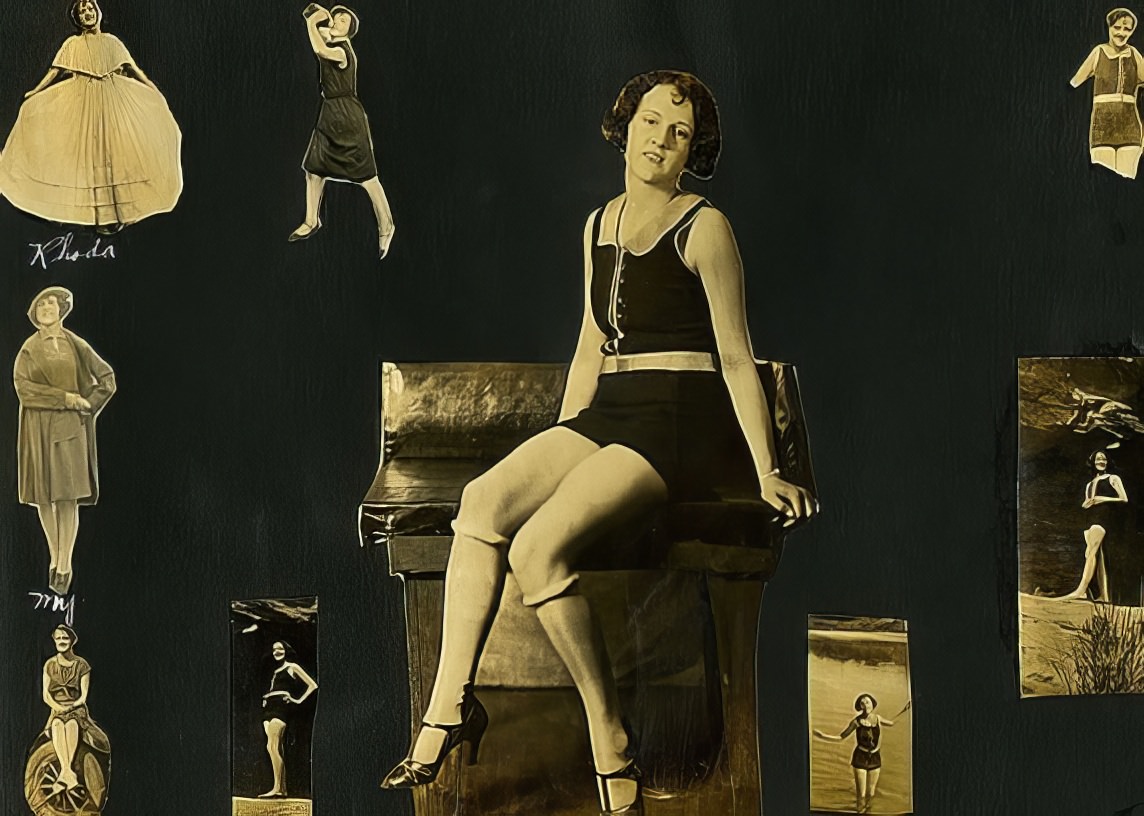
Against a dark studio backdrop, a seated model in a fitted, one-piece bathing suit becomes the focal point, her curled bob and confident posture framed by crisp white trim and a belt-like band at the waist. The look balances coverage with a new emphasis on shape, hinting at the moment when swimwear began to move away from heavy, modest layers and toward garments designed for motion. Around her, smaller cutouts and snapshots create a visual timeline, inviting the eye to compare silhouettes, hems, and the subtle shift from costume to athletic wear.
Early 1900s women’s swimsuits were never just about the water; they were about public space, propriety, and the growing idea that leisure could be modern. In the surrounding figures, you can sense competing expectations—some outfits read as dress-like and structured, while others adopt cleaner lines that suggest easier swimming and sunbathing. The collage format turns fashion history into a conversation, showing how the same basic purpose could be expressed through radically different cuts and layers.
Seen as a photographic exploration, the image works like a small museum wall: one central “bathing beauty” and a ring of supporting examples that chart changing tastes in beach fashion. Readers interested in vintage swimwear, women’s fashion history, and early beach culture will find plenty to study in the details—necklines, leg length, decorative piping, and the way posing itself sells a new ideal of freedom. It’s a reminder that the evolution of women’s swimsuits was as much about shifting social norms as it was about fabric and design.