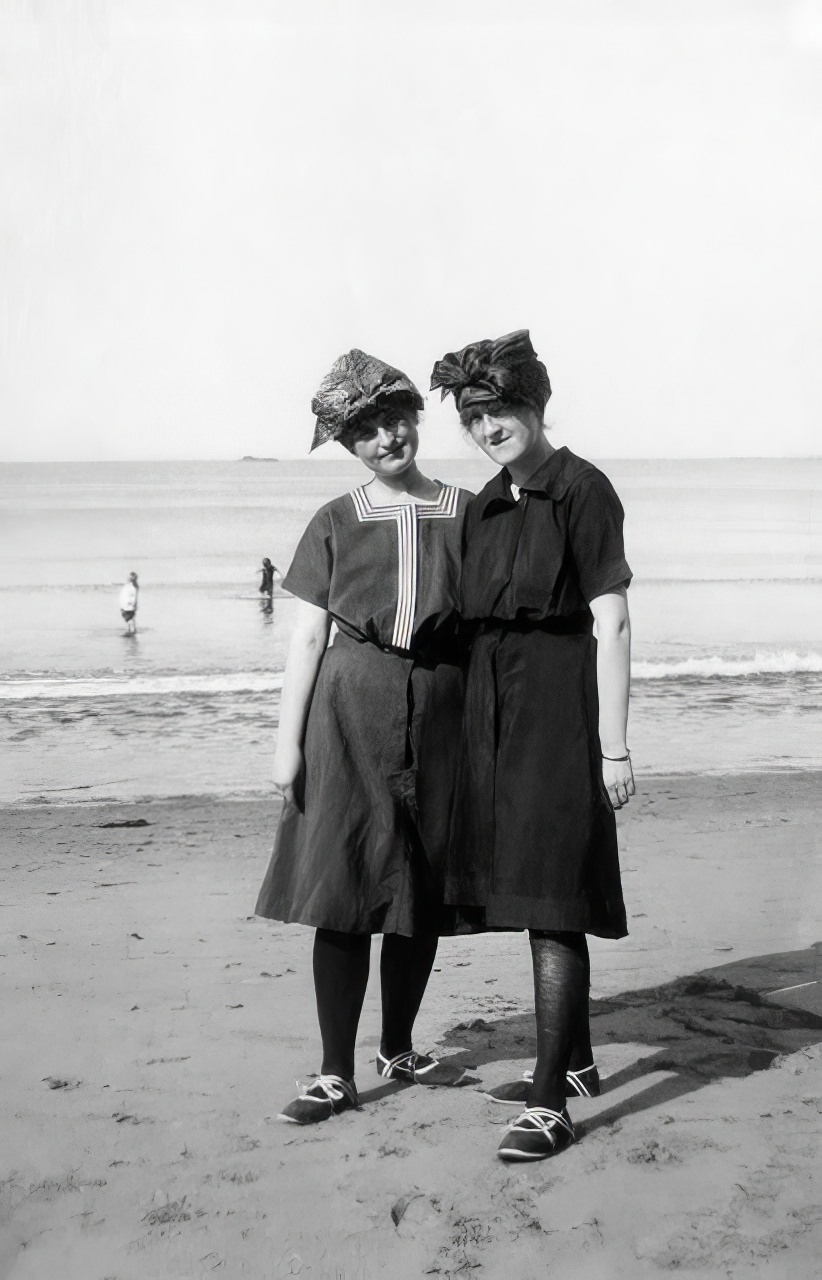
Two young women stand close together on a sandy shoreline, smiling with the quiet confidence of a day at the seaside. Their early 1900s bathing costumes look more like practical day dresses than modern swimwear—knee-length skirts, modest short sleeves, and dark stockings paired with lace-up beach shoes. Even the headscarves feel purposeful, suggesting wind, sun, and the simple desire to stay comfortable while enjoying the water.
Details like the sailor-style trim on one outfit and the belted waist on the other hint at how women’s swimsuits were beginning to blend fashion with function. The fabric hangs with weight, designed for decorum as much as for movement, while the overall silhouette keeps the body carefully outlined rather than revealed. In the distance, a few figures wade in the surf, reinforcing how public beaches were shared spaces where social rules shaped what was considered appropriate attire.
Set against a calm horizon, the photograph becomes a small window into the broader story of changing swimwear and changing expectations. As bathing culture grew and athletic recreation gained popularity, women’s beach clothing slowly shifted toward lighter materials, shorter hems, and greater freedom of motion. For readers exploring the evolution of women’s swimsuits, this scene captures the moment when “bathing beauties” still dressed for the shore with the manners of the street—poised, covered, and unmistakably of their time.