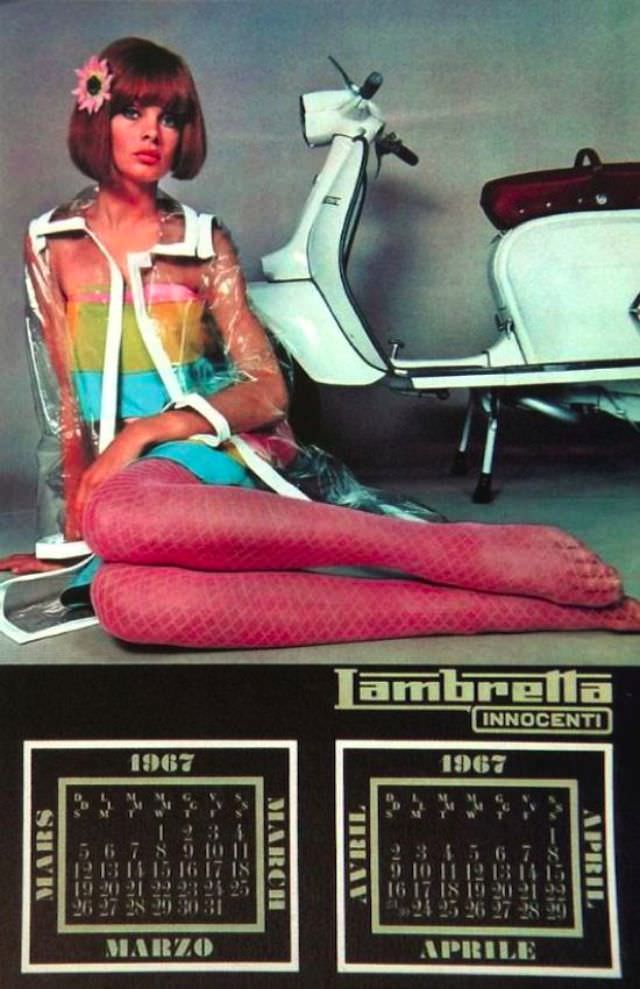
A pop-bright model lounges on the studio floor beside a pristine Lambretta Innocenti scooter, turning a utilitarian machine into a fashion accessory. The styling leans hard into 1967’s appetite for bold color and graphic contrast: a sharp bob haircut with a flower accent, a translucent raincoat trimmed in white, and saturated hosiery that reads like pure mod-era confidence. Even the neutral backdrop feels intentional, letting the scooter’s clean lines and the outfit’s color blocks do the talking.
Down at the bottom, the calendar layout anchors the glamour in everyday routine, with “Lambretta Innocenti” and the year “1967” framing the months in Italian. It’s advertising with a wink—part pin-up, part design manifesto—where youth culture, mobility, and modern style merge into one aspirational scene. The scooter sits slightly behind her like a promise of freedom, suggesting city streets, weekend rides, and a life lived on the move.
For anyone exploring late-1960s fashion and culture, this image is a vivid reminder that the era’s icons weren’t only musicians and magazines, but also the objects people rode and displayed. Lambretta calendars like this sold more than scooters; they sold a lifestyle built on sleek engineering, playful sensuality, and the new visual language of mod design. As a historical photo from 1967, it captures how consumer culture learned to speak fluently in color, attitude, and speed.