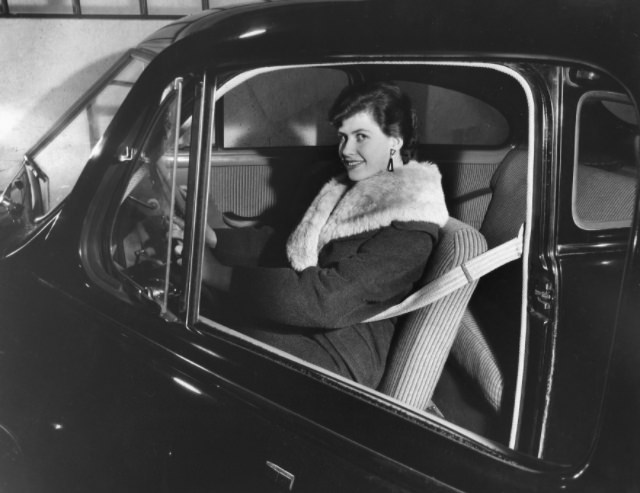
Inside a polished mid‑century sedan, a driver turns toward the camera with an easy smile while a wide strap runs diagonally across the torso, anchored low near the hip. The cabin’s simple upholstery and generous window frames set the scene, but the real focal point is that V-shaped three‑point safety belt—an unassuming band of webbing that quietly redefined what “protected” meant behind the wheel.
Volvo’s three-point seat belt became one of the most important automotive safety inventions because it restrains both upper body and pelvis, spreading crash forces across stronger parts of the body instead of concentrating them in one vulnerable area. The design is striking in its simplicity: one continuous belt, one buckle, and a geometry that encourages correct use—an approach that helped drive widespread adoption as cars became faster and traffic denser.
Looking at this photograph today, it reads like an early chapter in modern road safety culture, when manufacturers began treating injury prevention as engineering rather than chance. For anyone searching the history of the Volvo seat belt, the development of the three-point harness, or the inventions that saved lives, the image offers a vivid reminder that life-saving technology often arrives in everyday form—worn casually, fastened quickly, and trusted without drama.