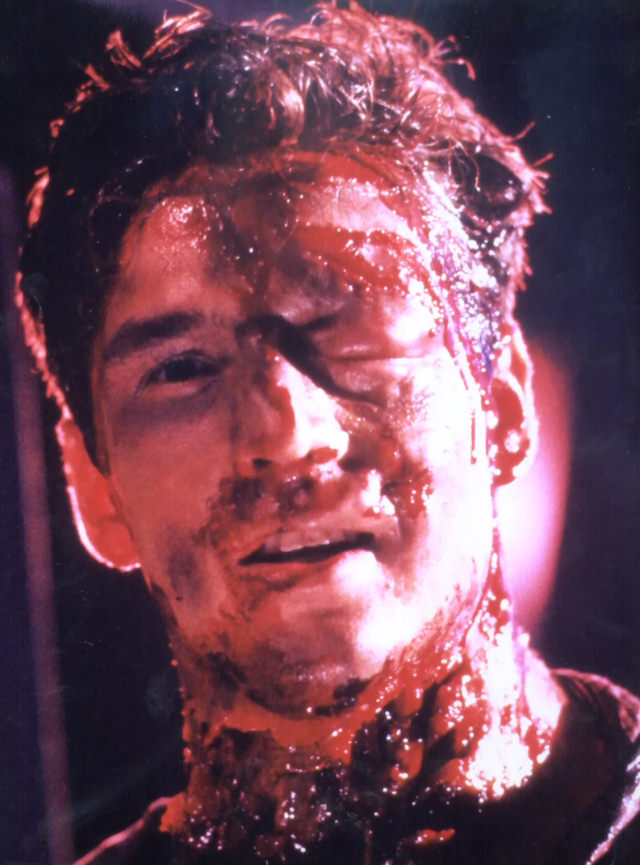
Under hot, magenta-tinted set lighting, a young man’s face fills the frame—one eye squinting, skin slick with sweat and stage blood, and a grimace that reads as equal parts pain and dark amusement. The tight close-up emphasizes the tactile messiness of practical effects: sticky prosthetic layers along the jaw and neck, wet sheen catching the light, and the kind of carefully controlled chaos that defines late-1980s horror filmmaking. Even without the wider scene, the mood is unmistakably Elm Street—dreamlike, feverish, and unnervingly intimate.
Behind-the-scenes from the making of “A Nightmare on Elm Street 5: The Dream Child” (1989) often means glimpsing the workmanship that sold the scares long before digital touch-ups became standard. Here, the emphasis is on physical performance and makeup artistry—effects applied directly to the actor’s skin, built to hold up under harsh lights and close scrutiny. The saturated color and stark highlights suggest a set designed to feel unreal, where flesh and nightmare imagery blur at the edges.
Fans of horror movie history and 1980s practical effects will recognize this kind of production still as more than a shock moment—it’s a record of craft. It invites a closer look at how “The Dream Child” aimed to escalate the franchise’s body-horror spectacle through texture, lighting, and on-camera illusion. As a WordPress post feature, the photo offers a visceral entry point for discussing Elm Street’s behind-the-scenes process, from makeup chairs to set-ready transformation, and why these analog techniques still haunt the genre’s imagination.