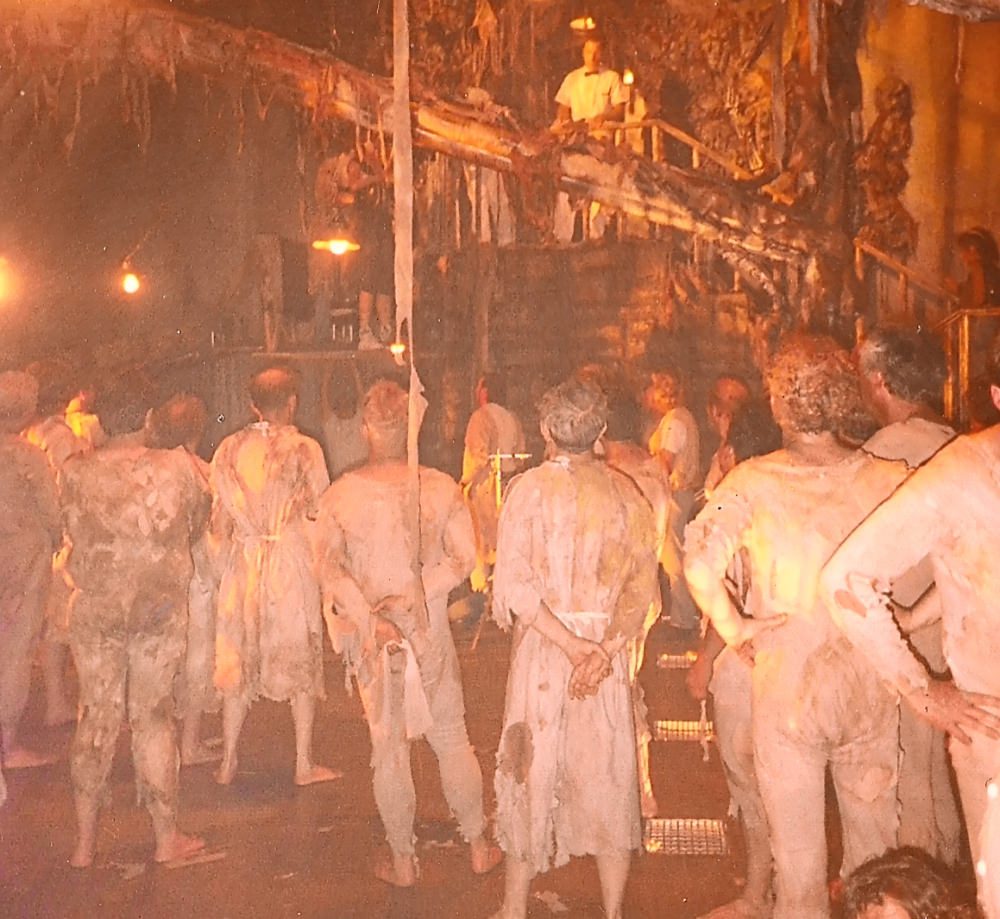
Amber set lights and wet, grime-streaked costumes place us squarely behind the scenes of *A Nightmare on Elm Street 5: The Dream Child* (1989), where the horror is built in plain view. A crowd of crew and performers gathers at floor level, backs turned toward the action, as if waiting for a cue or a reset between takes. Above them, catwalks and railings cut through a rough, cavernous set dressed to feel industrial and oppressive—exactly the kind of environment that reads as nightmare on screen.
What stands out is the choreography of filmmaking: bodies clustered in practical wardrobe, heads tilted toward the same focal point, and a single figure elevated on the walkway overseeing the moment. The scene’s muddy textures and flickering highlights suggest water effects, smoke, or damp set dressing—old-school practical choices that defined late-1980s horror production. Even without dialogue or motion, the photograph conveys the pause between intensity, when everyone holds position and the next shot is quietly prepared.
For fans of the Elm Street franchise, this rare production photo offers a grounded look at how *The Dream Child* created its atmosphere through sets, lighting, and sheer manpower rather than digital tricks. It’s a reminder that “behind-the-scenes” isn’t just trivia; it’s where the film’s mood is engineered, from the stained fabrics to the claustrophobic architecture. If you’re searching for 1989 movie history, practical effects era filmmaking, or *A Nightmare on Elm Street 5* production stories, this image is a vivid artifact worth lingering over.