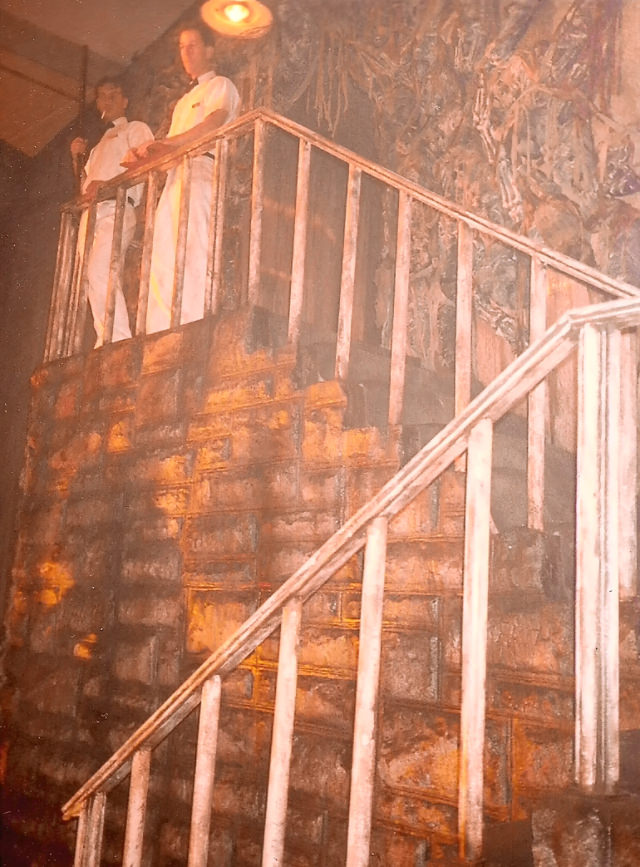
Warm, smoky light spills over a steep staircase set, where two figures in pale wardrobe pause along the landing as if waiting for a cue. The scuffed steps and rough-painted railings look deliberately aged, a practical illusion built for the camera to turn ordinary architecture into something uneasy. Even without dialogue, the composition hints at the tense, in-between moments that horror films rely on to make a hallway feel like a trap.
Behind-the-scenes stills like this are a reminder that *A Nightmare on Elm Street 5: The Dream Child* (1989) was as much craft as nightmare—carpenters, painters, lighting, and staging all conspiring to make dread believable. The heavy shadows and amber glow suggest a controlled, theatrical setup rather than natural light, emphasizing how the franchise’s dream logic often starts with very tangible set pieces. You can almost sense the crew just out of frame, fine-tuning angles and timing so the scene reads as suspense instead of stagecraft.
For fans of classic 1980s horror and film production history, this photo offers a grounded look at how practical sets shaped the mood of late-era slasher cinema. It’s a small window into the making of *The Dream Child*, where every worn board and streaked wall surface works to pull viewers deeper into an unsettling world. If you’re collecting memorabilia, researching the Elm Street series, or simply love movie-making ephemera, this kind of candid production image carries the texture of the era in a way publicity shots rarely do.