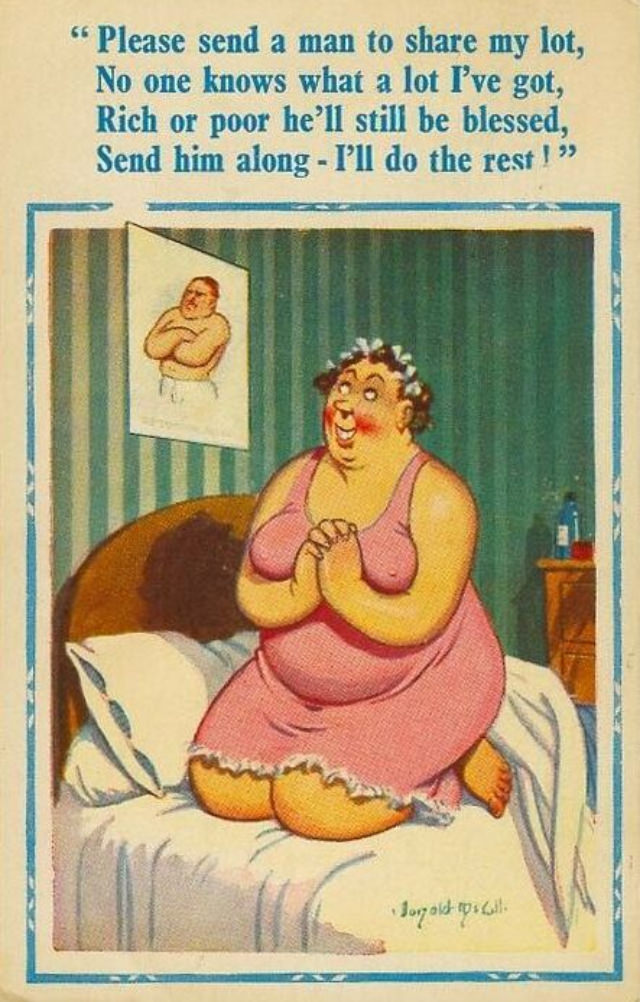
A cheeky rhyming caption crowns this Donald McGill-style postcard comic, setting the tone with a singsong plea for “a man to share my lot” and a wink that she’ll “do the rest.” Below the verse, a rosy-cheeked, full-figured woman kneels on a rumpled bed in a pink nightdress trimmed with lace, hands clasped in exaggerated anticipation. The scene is framed like a little stage: striped wallpaper, a bedside table with small items, and a pin-up style poster on the wall that doubles down on the gag.
McGill’s early-1900s humor leaned heavily on broad caricature and innuendo, and this artwork is a textbook example of how the joke is built—part playful poetry, part suggestive domestic tableau. The bright colors and simplified shapes make it instantly readable, while the character’s expression and posture carry most of the punchline. Even without precise dating on the card itself, the printing style, costume, and overall layout evoke the mass-produced seaside-postcard tradition that made these “saucy” comics a popular form of everyday entertainment.
For collectors of vintage British comic postcards, this piece offers a vivid snapshot of period taste, flirting with propriety while staying just on the comic side of scandal. It also opens a window onto changing attitudes toward bodies, gender, and humor—uncomfortable at times to modern eyes, yet historically revealing in what it chose to exaggerate and why. Whether you’re browsing early 1900s artworks, Donald McGill postcards, or classic pin-up comedy ephemera, this image remains a memorable example of how a single caption and a single character could sell a joke at a glance.