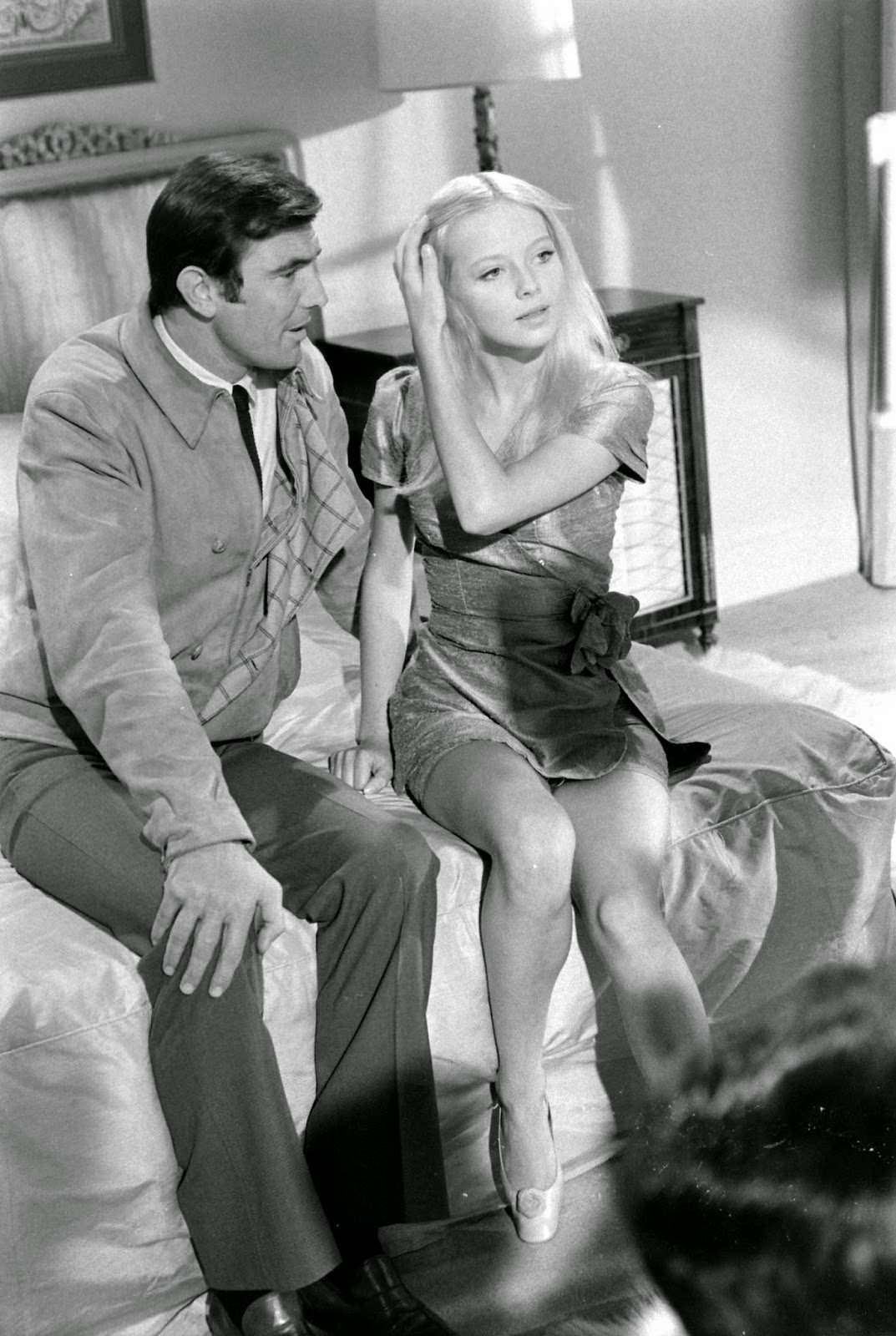
George Lazenby sits close beside Agneta Eckemyr in a softly lit interior, the pair arranged on the edge of a bed as if between takes or in the middle of a screen test. His tailored jacket and composed posture contrast with her shimmering short dress and poised, mid-gesture sweep of hair, a small moment that reads as both candid and carefully staged. The camera’s angle catches their different lines of attention—his turned toward her, hers cast outward—adding a hint of story without giving anything away.
Set against simple mid-century furnishings, the scene leans into the glamorous, slightly theatrical mood that surrounded late-1960s Movies & TV publicity. Light falls cleanly across their faces and clothing, emphasizing texture: the sheen of fabric, the crisp edge of lapels, the polished shoes. Even without explicit context, the photo feels like it belongs to the Bond orbit, where casting rumors and promotional imagery often blurred into the mythology of the franchise.
For fans searching George Lazenby 1967 or Agneta Eckemyr Bond girl hopeful, this snapshot offers a fascinating glimpse at the era’s star-making machinery—part style document, part cinematic tease. It’s a reminder that iconic screen personas are built not only on finished films, but also on these in-between moments when possibility hangs in the air. Whether it was taken for publicity, a test, or press coverage, the image preserves the mood of a turning point in pop culture espionage chic.