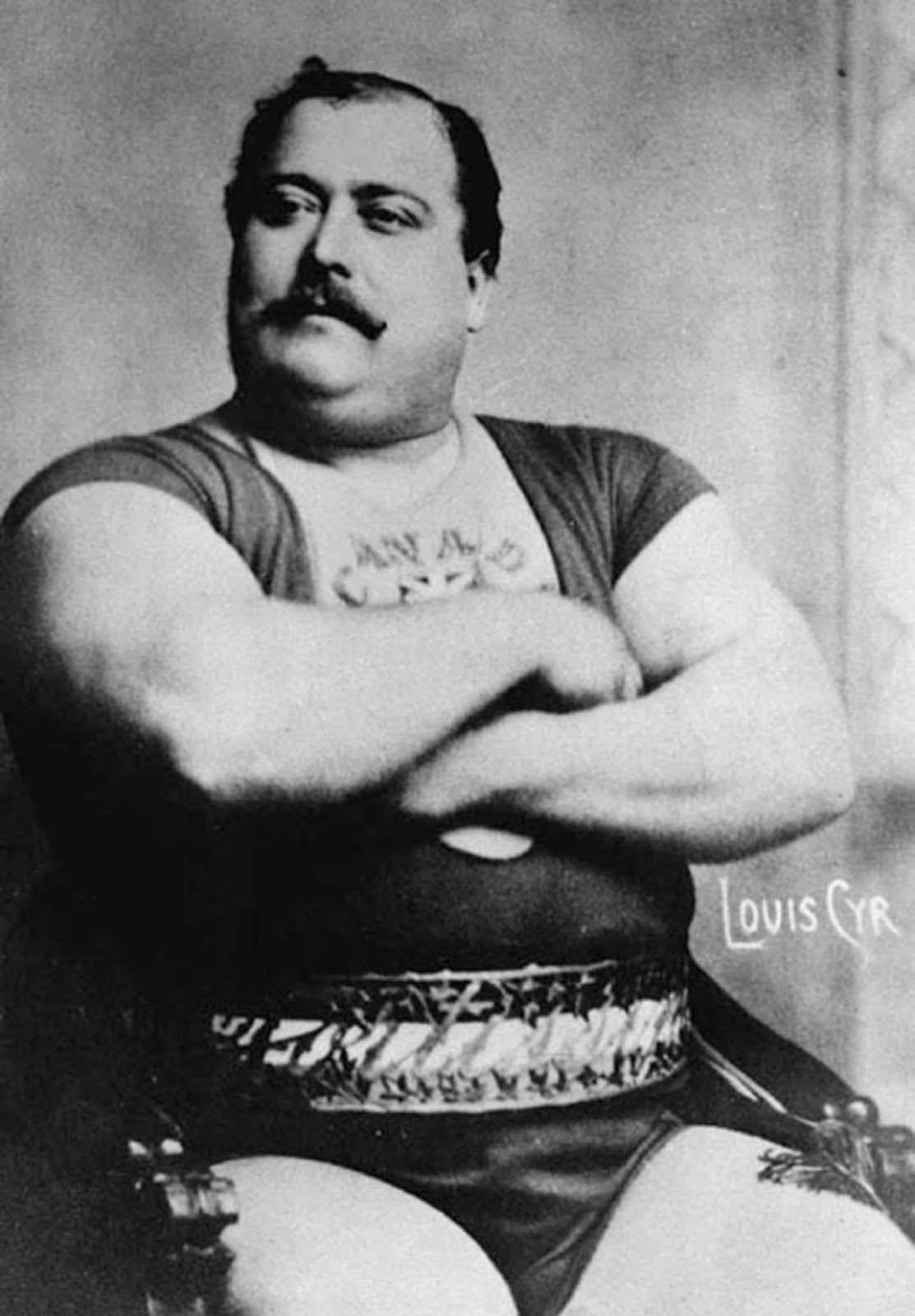
Broad-shouldered and self-possessed, Louis Cyr sits for the camera with arms folded, moustache neatly groomed, and a thick lifting belt cinched tight at the waist. The studio backdrop is plain, letting the viewer focus on the sheer mass of his torso and forearms—an early 1900s strongman presentation that favors solidity over the later, more sculpted bodybuilding look. His name appears on the image, a quiet signature that turns the portrait into a piece of sporting legend.
Around 1900, strength athletes were marketed as marvels of modern muscle, and Cyr’s recorded feats still read like folklore made tangible: lifting 500 pounds (227 kg) with one finger and backlifting 4,337 pounds (1,967 kg). Numbers like these helped define what “strongman” meant before standardized competitions and carefully regulated equipment. In an era of vaudeville stages, athletic clubs, and public exhibitions, reputation traveled through posters, photographs, and word of mouth as much as through official record books.
Seen today, this photograph works as both sports history and early fitness culture—an artifact from the beginnings of modern bodybuilding and strength training as spectacle. The belt, the confident pose, and the deliberate presentation hint at the discipline behind the showmanship, while the soft grain of the print reminds us how far removed this world is from high-definition gym imagery. For readers exploring Louis Cyr, turn-of-the-century strongmen, and the roots of physical culture, the portrait offers a vivid entry point into a time when strength itself was entertainment.