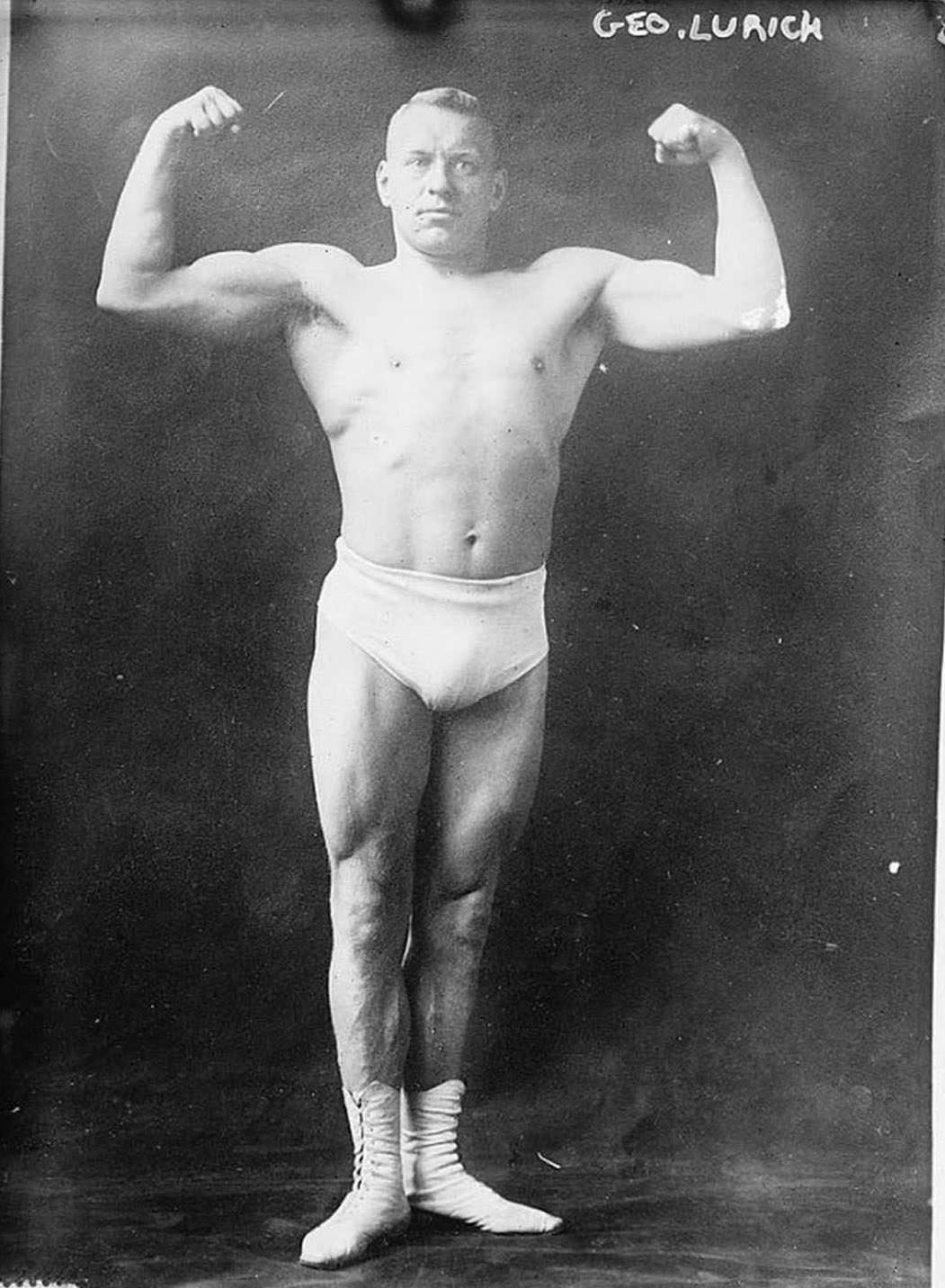
Georg Lurich stands center frame in a classic strongman pose, arms raised and flexed to emphasize broad shoulders, thick biceps, and a solid, athletic torso. The studio setting is spare, pushing all attention to the body’s geometry—symmetry, balance, and sheer physical presence—while the handwritten “GEO. LURICH” at the top anchors the portrait like a calling card. Even in stillness, the stance suggests performance: strength displayed not through action, but through controlled presentation.
Taken in 1910, this photograph belongs to the early era of modern bodybuilding and physical culture, when wrestlers and strongmen helped shape public ideas about training, discipline, and masculine vitality. Lurich’s attire and staged posture reflect a time when muscle was marketed as spectacle as much as sport, bridging the worlds of athletics, theater, and emerging fitness celebrity. The image reads like an advertisement for capability—proof of conditioning meant to be admired, remembered, and circulated.
For readers interested in sports history, old-school strength training, and the roots of bodybuilding photography, this portrait offers a striking window into how the athletic ideal was crafted more than a century ago. The plain backdrop and direct gaze keep the focus on form, inviting comparisons with later bodybuilding aesthetics and the evolution of posing. As a historical photo, “Georg Lurich, 1910” captures not just a physique, but an early chapter in the visual culture of strength.