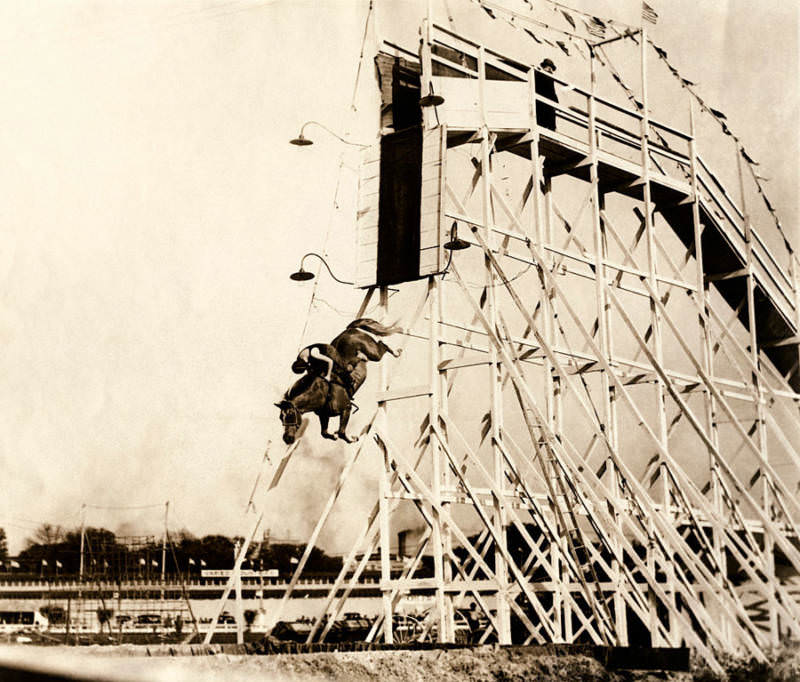
Midair against a lattice of timber supports, a horse and rider plunge from a towering diving platform toward the pool below, suspended for a split second between showmanship and danger. The structure itself—braced like a temporary grandstand, strung with lights, and built to elevate the stunt high above the crowd—hints at the fairground spectacle that once drew onlookers in droves. Even without hearing the splash or the cheers, the photograph carries the tension of the leap and the precision required to land safely.
Horse diving was marketed as thrilling entertainment, but it demanded methodical preparation rather than reckless bravado. Divers often trained with their horses for years, gradually moving up to higher and more challenging platforms, building trust so the animal would commit to the drop and the rider could guide the entry. The steep ramp, the narrow takeoff, and the dizzying height visible here underline why the act was considered one of the most risky stunt shows ever performed.
For readers exploring the history of extreme sports and sideshow attractions, this scene offers a stark reminder of how public appetites for novelty shaped live entertainment. The interplay of engineering and performance—platform, ramp, lights, and water—turns an athletic feat into a dramatic event, carefully staged for maximum impact. As a historical photo, it’s both an arresting snapshot of daredevil culture and a conversation starter about training, safety, and spectacle in a different era.