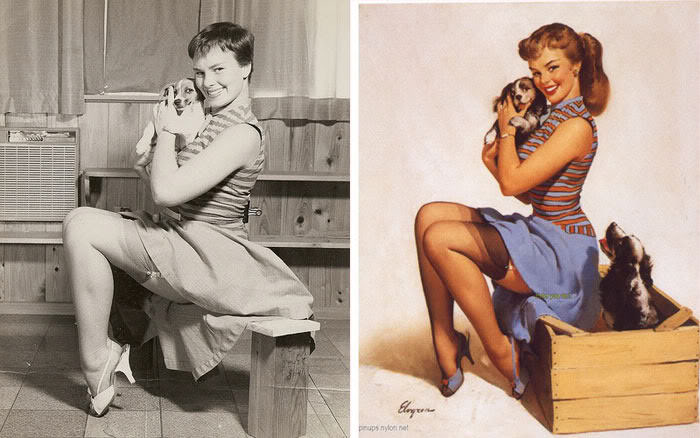
Side by side, the post pairs a candid studio reference photo with a polished pin-up painting, letting you see the transformation from real model to idealized artwork. In the left image, a smiling woman sits on a simple wooden bench, cradling a small dog in an unpretentious interior with curtains and a boxy air conditioner nearby. On the right, that everyday setup becomes a glowing illustration: warmer tones, smoother lines, and a classic pin-up pose that feels instantly recognizable from mid-century commercial art.
Details make the “before and after editing” comparison especially revealing—down to the striped top, the turned legs, and the playful companion animal. The painter’s choices heighten glamour through hair styling, makeup, lighting, and the sheen of fabric, while the background is simplified into a clean stage that keeps attention on figure and expression. Even the dog’s presence reads differently: affectionate in the reference, then more like a narrative prop in the finished pin-up composition.
What emerges is a reminder that incredibly beautiful pin-up paintings were built on ordinary moments, real bodies, and practical photo sessions rather than pure imagination. These comparisons invite a closer look at retouching and artistic license—how posture is refined, proportions are adjusted, and mood is curated for mass appeal. For readers interested in vintage illustration, retro glamour, and the history of commercial artwork, the juxtaposition offers an honest glimpse behind the iconic aesthetic.