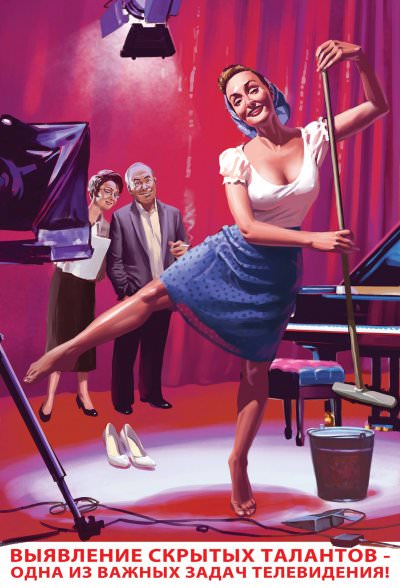
Under the glare of studio lights, a barefoot performer steals the scene while balancing a mop like a dance partner, one leg lifted with the ease of a practiced entertainer. The set is unmistakably television: a large camera in the foreground, curtains and cables, and a piano waiting nearby, all framing a moment where everyday work turns into stagecraft. Even without a specific place or date, the composition reads as a spirited mid‑century-style celebration of performance and production.
Behind her, two observers—dressed for a formal broadcast environment—look on with amused approval, reinforcing the poster’s message about discovering ability where no one expects it. The Russian slogan at the bottom translates the idea plainly: revealing hidden talents is among television’s most important tasks. That theme lands through contrast: glamour and grit, spotlight and bucket, technique and spontaneity, all staged to make the “ordinary” feel worthy of applause.
For a WordPress post focused on artworks and media history, this image works as a vivid entry point into how television once marketed itself as a cultural scout and public educator. It also highlights the persuasive language of broadcast-era poster design, where bright color, theatrical poses, and studio equipment combine into a clear narrative about talent discovery. Readers searching for Soviet poster art, television propaganda, or historical studio imagery will find a compact story here—one that turns a humble routine into a televised triumph.