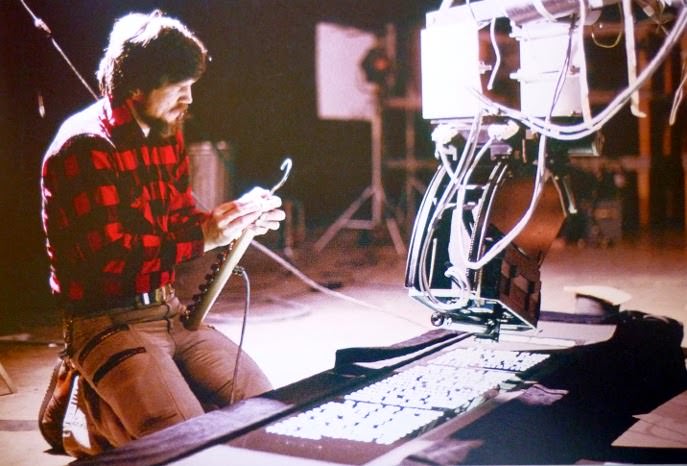
Under the hot wash of studio lights, a crew member in a plaid shirt concentrates on a cluster of cables and a handheld tool, absorbed in the kind of careful, unglamorous labor that makes Movies & TV possible. The foreground is dominated by a large rig—part camera support, part lighting or control assembly—looming over a work surface, with wiring snaking through the frame like veins in a mechanical body. Even without a visible set, the atmosphere reads unmistakably as behind-the-scenes filmmaking: quiet, technical, and intensely focused.
What stands out is the mix of hands-on craftsmanship and emerging complexity, a reminder that screen magic has always depended on people who can troubleshoot, solder, adjust, and improvise. The equipment looks bulky and purpose-built, suggesting an era when many solutions were custom, physical, and tactile rather than tucked into software menus. That contrast—human hands against a dense tangle of hardware—adds texture to the story of how productions were engineered long before audiences ever saw the finished shot.
For WordPress readers interested in film history, television production, and vintage studio technology, this photo offers an evocative glimpse into the workbench side of entertainment. It speaks to the technicians and effects crews who operate in the margins of fame, yet shape the look and feel of what ends up on screen. As a historical image for a Movies & TV post, it’s a compelling anchor for conversations about practical effects, production gear, and the everyday realities of making visual storytelling happen.