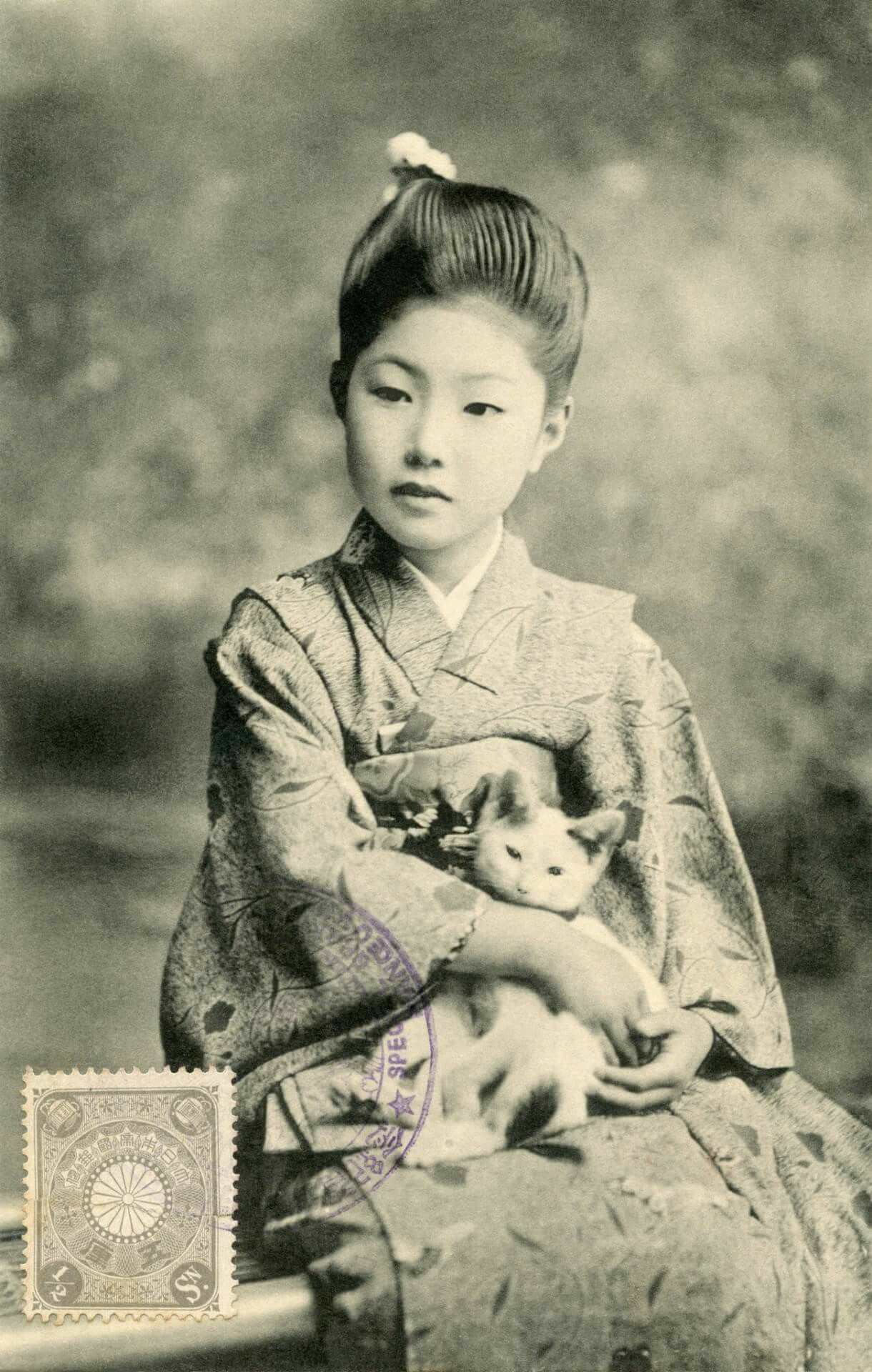
Soft studio light and a mottled backdrop frame a quiet moment from Japan in 1907: a young girl in a patterned kimono sits composed, hair neatly arranged, her gaze steady and unhurried. The formal pose feels unmistakably early-20th-century, yet her expression is gentle rather than stiff, as if the photographer caught her between instructions. Fine details in the fabric and collar stand out, offering a small window into everyday dress and portrait style of the era.
Curled into her lap, a pale kitten becomes the scene’s warm, funny counterpoint—ears up, face forward, looking almost as serious as its young guardian. Her arms circle the animal with practiced care, suggesting the kitten was brought in to help her relax or simply because it was a beloved companion worth including. That contrast between ceremonial clothing and a squirm-ready pet is what makes the photograph feel intimate and surprisingly modern.
Along the lower edge, a visible postal stamp and markings hint that this portrait likely traveled as a postcard, carrying a slice of personal life across distance. For collectors of antique Japanese postcards, Meiji-era photography, or historical images of children and pets, it’s the kind of piece that draws you in with texture and tenderness rather than spectacle. More than a novelty, it preserves a small, humane story—one careful embrace, one alert kitten, and a moment from 1907 that still holds its charm.