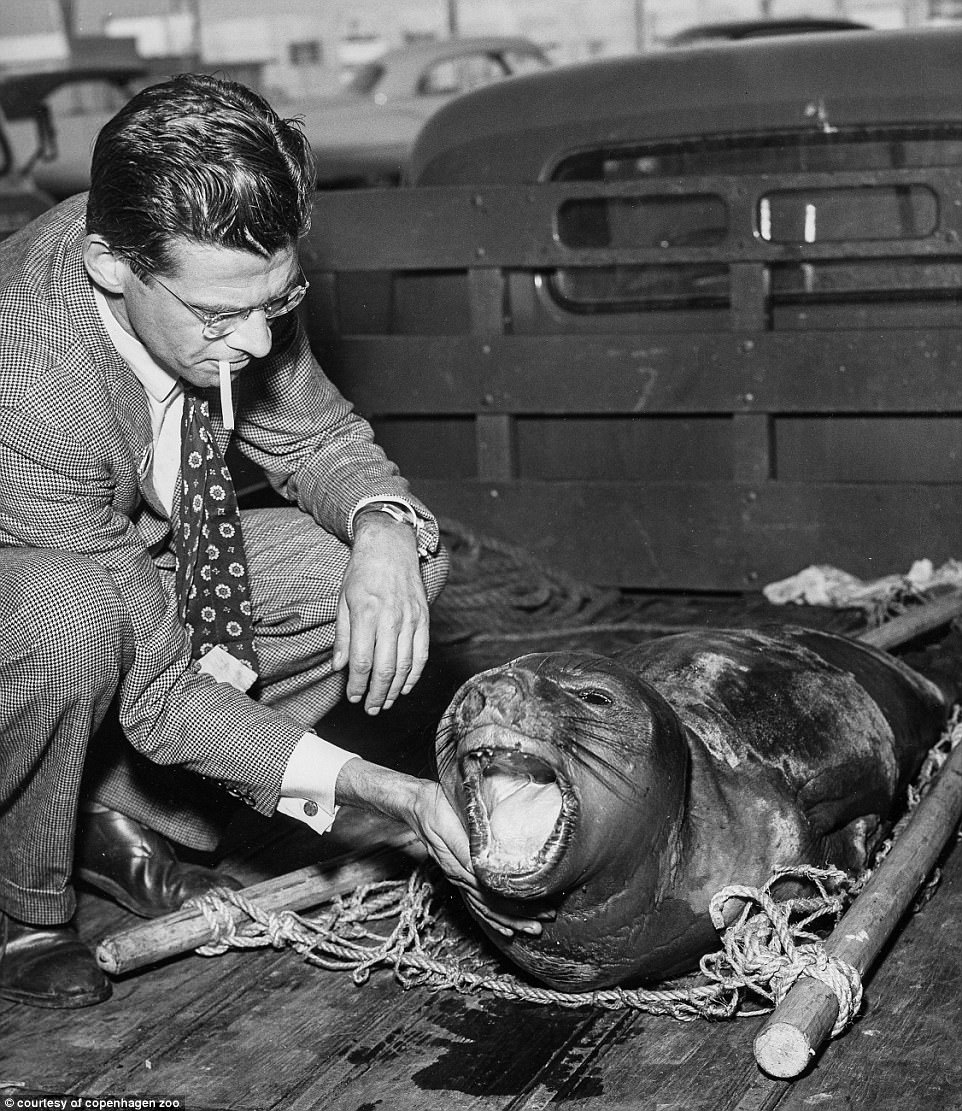
Bent at the knees in a neat suit and patterned tie, a bespectacled man leans into the bed of a vehicle to stroke an unlikely passenger: a seal lying on a wooden platform, still tangled in the ropes of its net carrier. The animal’s mouth is open wide in a dramatic, almost comic display—part yawn, part protest—while the handler’s calm posture suggests practiced confidence. Behind them, the blurred silhouettes of mid-century cars and the utilitarian sides of the transport create a distinctly urban, working-day backdrop.
Details in the frame hint at how wildlife was moved and managed before modern crates and sedation protocols became standard: thick rope, simple wooden poles, and a makeshift sling that could be hauled or lifted. The contrast is the photograph’s charm—formal office attire meeting wet, heavy marine life—capturing a moment when public curiosity, animal care, and practical logistics collided in the most hands-on way. Even without a visible signboard or captioned setting, the scene reads like a behind-the-scenes glimpse of animal transport for a zoo, aquarium, or rescue operation.
For today’s viewers, this historical photo lands as both funny and revealing, a reminder that everyday work once included tasks we now associate with specialists and protective gear. It’s also a striking slice of social history: the era’s fashion and demeanor set against an unscripted encounter with a powerful creature far from the sea. If you’re drawn to oddball vintage moments, early animal handling practices, or the surprising intersections of city life and nature, this image delivers a memorable story in a single frame.