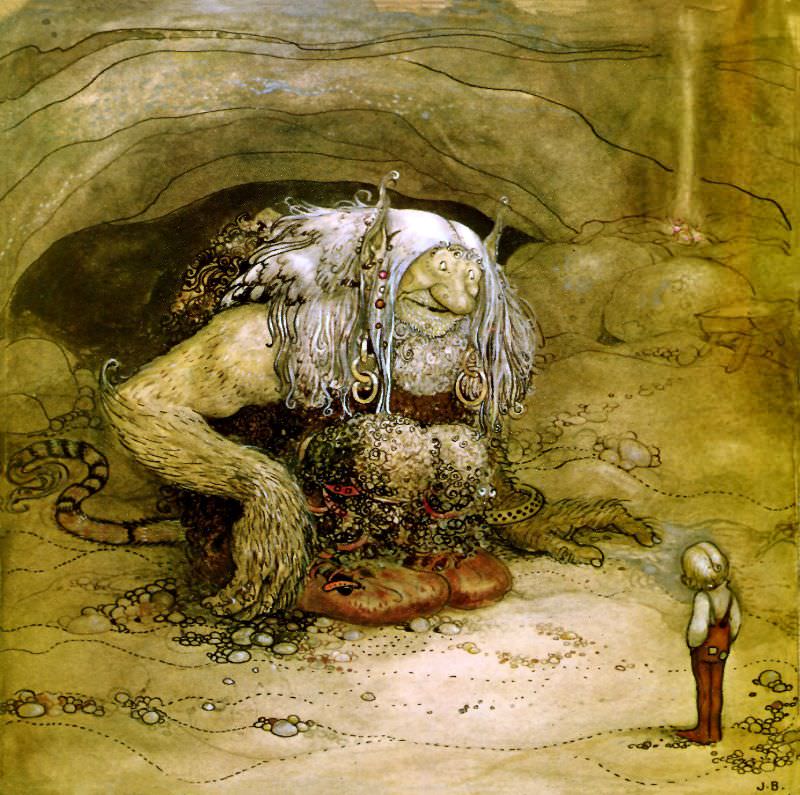
Deep inside an earthy, cave-like hollow, a hulking troll sits half in shadow, its pale hair spilling in tangled strands and its heavy arms braced against the ground. Jewels, rings, and trinkets glint against mottled skin and fur, while oversized red shoes and a faintly amused expression lend the creature an unsettling charm. The palette feels like stained parchment—greens, browns, and soft golds—suggesting an illustration meant to be read slowly, as if every pebble and curl of line hides part of the story.
Across the open space stands a little boy, small enough to make the troll seem monumental, yet steady in posture as he faces the creature head-on. The distance between them becomes the real drama: a quiet standoff where curiosity competes with caution, and childhood bravery is measured not by action but by gaze. Details such as the troll’s hoard-like ornaments and the dotted trails on the ground hint at folklore traditions—treasure, tunnels, and the strange etiquette of meeting what lives beneath the surface.
Dated in the title to 1912, the artwork belongs to an era when fairy-tale imagery flourished in print culture, blending whimsy with darker undercurrents. “Little boy and Troll, 1912” offers a richly atmospheric scene for anyone interested in early 20th-century illustration, mythic creatures, and the visual language of folklore. For WordPress readers searching for vintage fantasy art, historical illustration, or classic troll imagery, this piece provides a memorable window into how imagination was drawn a century ago.