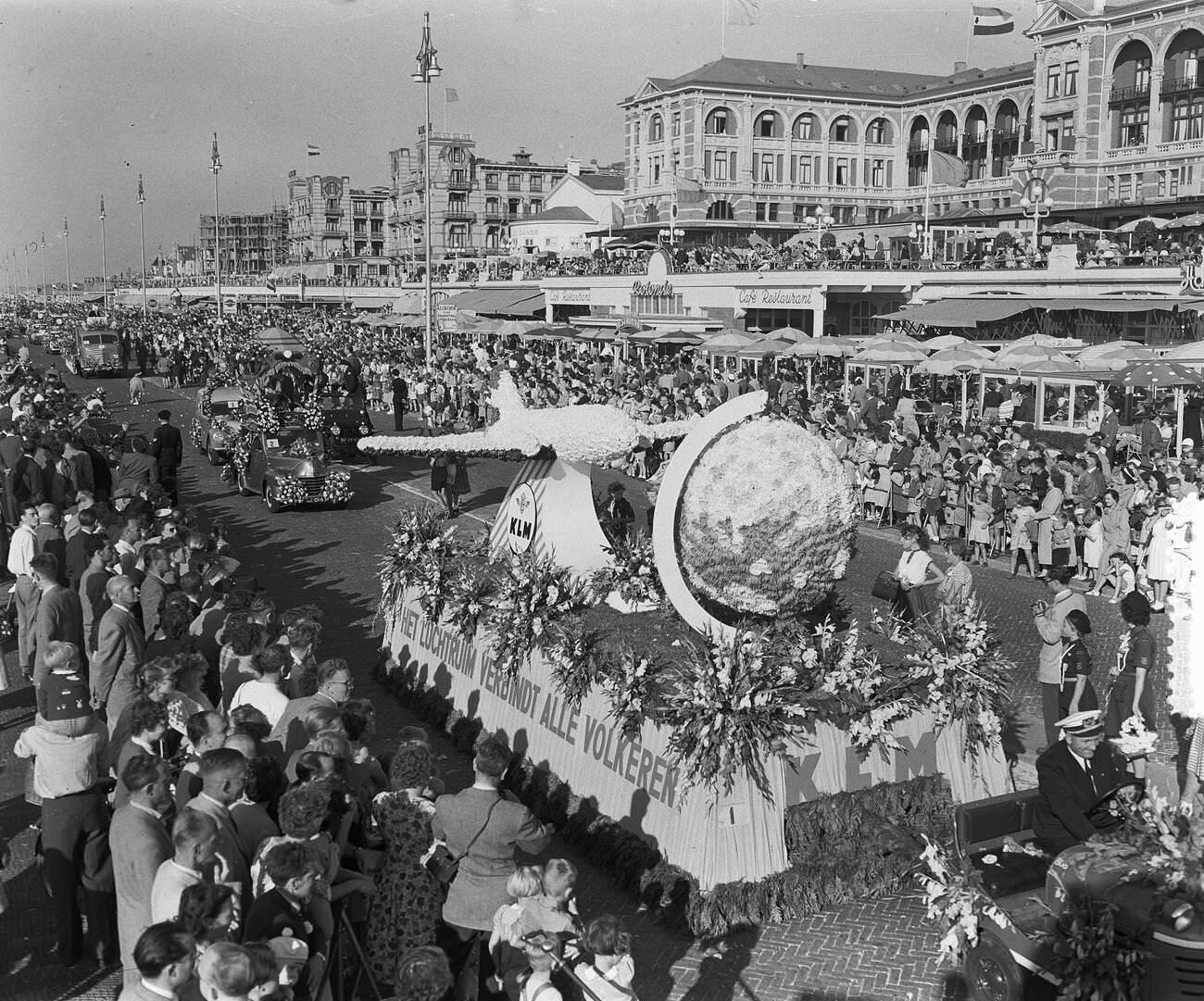
Crowds press up against the barriers along a broad boulevard in The Hague, turning the street into a grandstand for a mid-century celebration. Flower-laden floats roll past in a slow, ceremonial rhythm, their shapes built from dense blossoms and greenery that read as both art and civic pride. Behind them, a line of decorated vehicles and the city’s imposing seaside-style architecture frame a day when public space belonged to spectacle.
Cycling adds an extra current of excitement to the scene, hinted at by the post’s title linking the parade to Tour de France riders in the 1950s. The combination of sport and pageantry feels distinctly of its era: athletes welcomed not only for competition, but as international guests paraded through town amid flags, uniforms, and cheering families. For anyone searching for Tour de France history in the Netherlands, this moment bridges the world of road racing with the rituals of a flower parade.
Details reward a closer look, from the packed café terraces and umbrellas to the careful choreography of marshals, musicians, and onlookers craning for a better view. The floats themselves speak the language of postwar optimism—abundance, craftsmanship, and shared celebration—set against a cityscape that looks simultaneously formal and festive. As a historical photo, it offers more than “Sports”: it’s a snapshot of how The Hague welcomed summer, tourism, and international cycling fame with flowers.