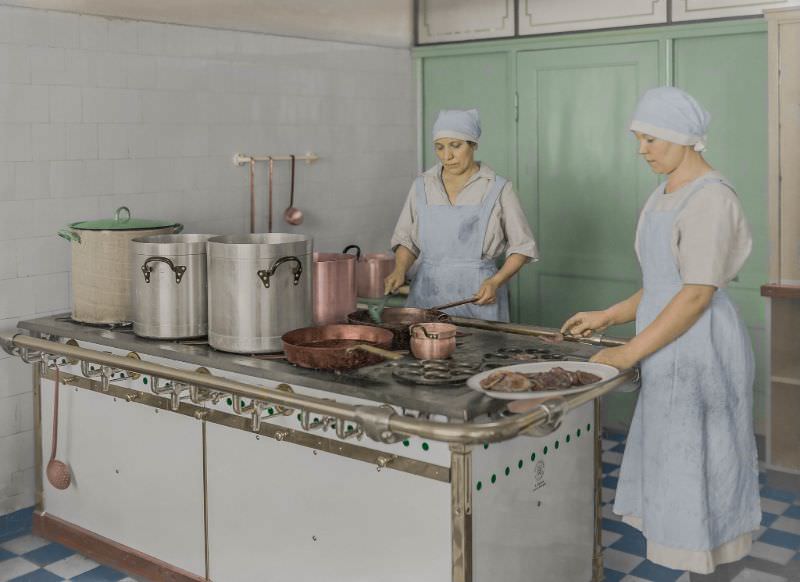
Freshly scrubbed tiles, pale green cabinetry, and a blue-and-white floor set the tone for a workplace designed to look modern and efficient. In the then newly opened Elanto co-operative restaurant at Viipuri street 4 in Helsinki, the kitchen reads like a statement of progress: clean surfaces, orderly storage, and a layout built for speed. The gentle colorization brings out the cool hues of the room and makes the scene feel immediate rather than distant.
At the center stands an imposing industrial stove, its metalwork lined with valves and rails, topped with oversized stockpots and copper pans ready for service. Two uniformed kitchen workers, headscarves tied and aprons neat, focus on the practical choreography of preparing food at scale. Even without a dining room in view, the equipment tells the story of a busy cooperative restaurant—one built to feed many, reliably and affordably.
Behind the calm order of the image sits a larger chapter in Helsinki’s urban life, when cooperative institutions and “modern” professional kitchens were reshaping how city residents ate outside the home. Details like the standardized workwear, the heavy-duty cookware, and the spotless, easy-to-clean surfaces reflect contemporary ideas about hygiene and organization in commercial cooking. For anyone searching for Elanto, Helsinki 1930, or the history of restaurant kitchens in Finland, this photograph offers a vivid, grounded glimpse into everyday labor and the promise of new facilities.