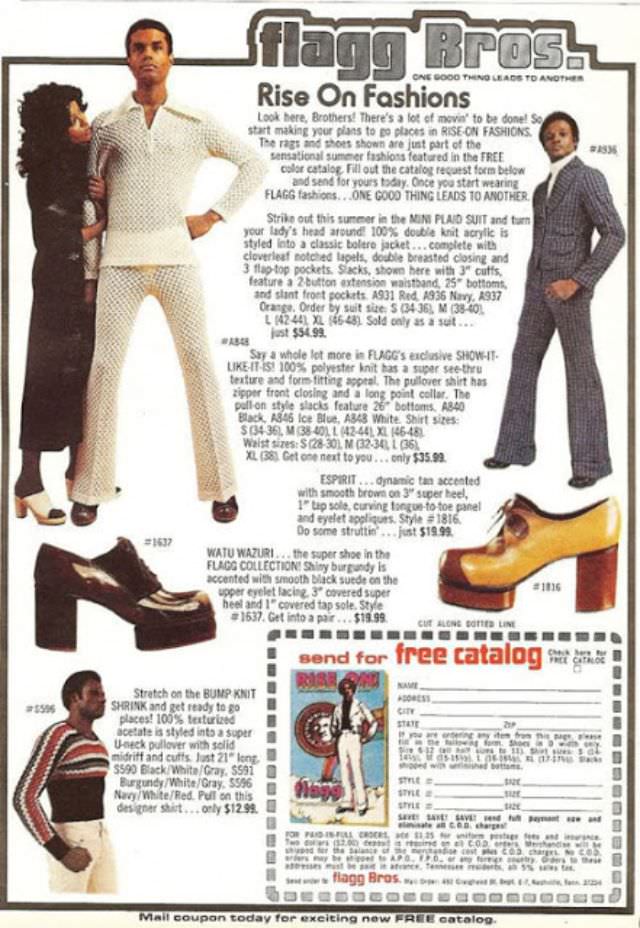
Across a busy magazine page, “flagg Bros.” shouts in bold type above the slogan “Rise On Fashions,” selling the promise that “one good thing leads to another.” The layout is pure 1970s fashion advertising: dense copy, catalog ordering language, and multiple posed figures arranged like a mini runway. Everything competes for attention—brand name, product blurbs, and the insistence that this is the season’s look.
Center stage stands a tall model in a crisp, light-colored suit with exaggerated lapels and a wide collar, a silhouette made for nightclub lights and big entrances. Nearby, another model wears a patterned suit, while a third leans into the era’s love of knitwear with a striped sweater that looks designed to pop from across the room. The styling leans hard into swagger—confident stances, flared proportions, and textures that read as both “dressy” and streetwise in the language of ’70s menswear.
At the bottom, oversized platform shoes—gleaming two-tone leather and chunky heels—are treated like stars, complete with close-up product images and numbers, as if footwear alone could deliver instant cool. A mail-in “send for free catalog” coupon anchors the page, reminding readers that fashion was increasingly bought through the post, not just tried on in stores. The result is equal parts cringe and charm: a time capsule of retro fashion, catalog culture, and the unforgettable bravado of 1970s style.