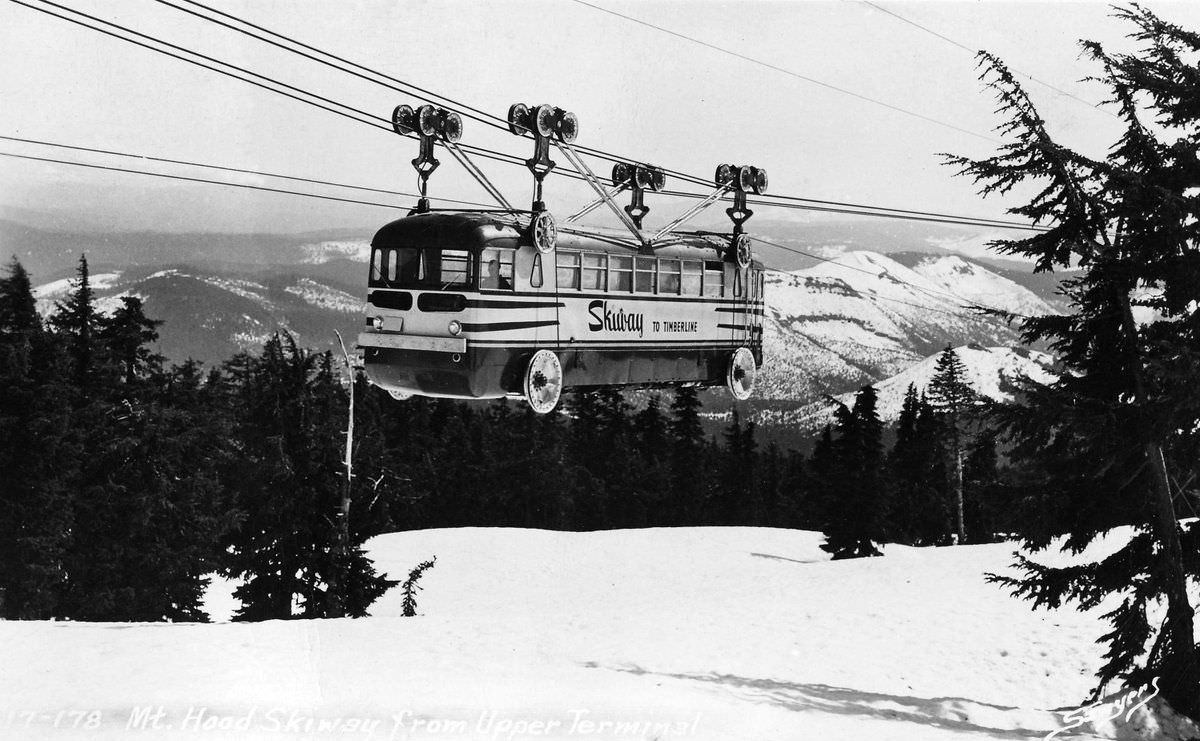
Suspended above a sweep of snow and dark evergreens, the Skiway tram looks like a streetcar that decided to take flight. Its boxy cabin rides the cables on a framework of pulleys, with large wheels and broad windows giving it the unmistakable silhouette of a mountain-going “bus” in midair. The lettering along the side reads “Skiway to Timberline,” tying the scene to winter travel and a destination built for high-country recreation.
Beyond the inventive vehicle, the landscape does much of the storytelling: layered ridgelines fade into the distance while open slopes cut pale ribbons through the forest. The tram’s height above the drifts hints at the challenge it was designed to solve—moving people efficiently over steep, snowy terrain where roads could be slow or unreliable. In an era fascinated by mechanical solutions, this aerial tramway concept feels both practical and delightfully bold.
For readers interested in the history of ski lifts, mountain transportation, and early resort infrastructure, this photo is a vivid reminder that innovation often arrives in familiar shapes. The Skiway borrows the look of everyday transit and adapts it to a rugged alpine setting, turning a ride into an experience as memorable as the skiing itself. As a piece of invention history, it captures the optimism of engineering meeting winter’s obstacles head-on.