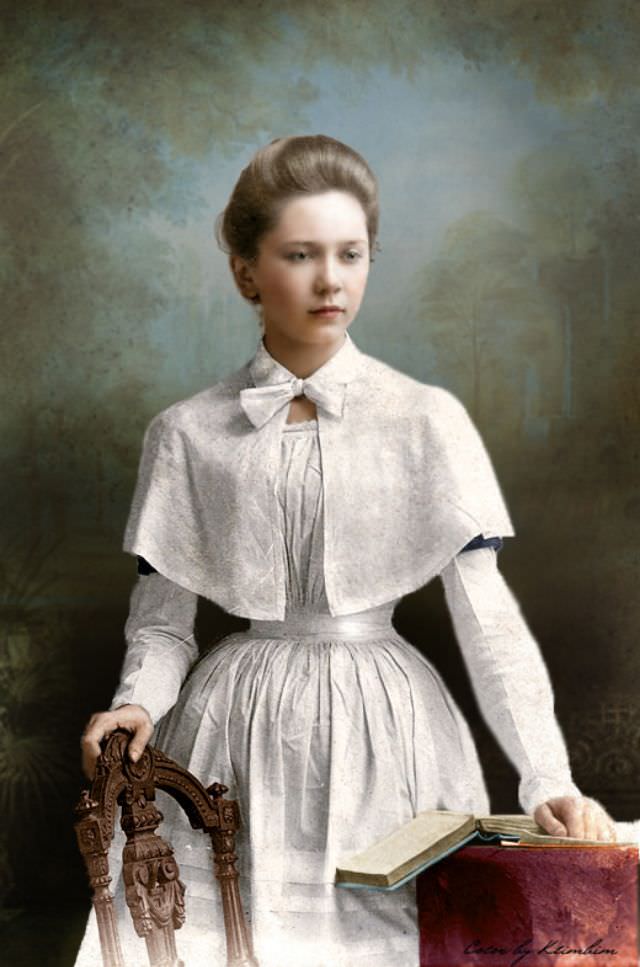
Marietta Dequinze is presented here in a carefully colorized studio portrait, her calm, inward-looking expression turned slightly away from the camera. The high collar and neatly tied bow, paired with the soft drape of a capelet over a fitted bodice, place the fashion firmly in the early 20th century, when formal portrait sessions were both a milestone and a message. Against a muted painted backdrop, the gentle tones of her face and clothing give the scene a lifelike immediacy that black-and-white alone often withholds.
A carved wooden chair anchors one side of the composition, while a table with stacked books and a rich fabric covering balances the other, creating a deliberate arrangement of refinement and learning. Props like these were common in period photography, hinting at education, domestic respectability, or aspiration without spelling anything out. The crisp highlights on the white dress and the restrained palette draw attention to texture—fabric, woodwork, and paper—making the portrait feel tactile and intimate.
Between 1900 and 1917, the world moved through profound social and technological change, and portraits like this remain among the most accessible records of everyday identity. Colorization adds a new layer to historical photo restoration, inviting modern viewers to linger on details and imagine the lived reality behind the pose. For readers interested in genealogy, antique photography, and early 1900s fashion, this image offers a quiet but compelling window into Marietta Dequinze’s era.