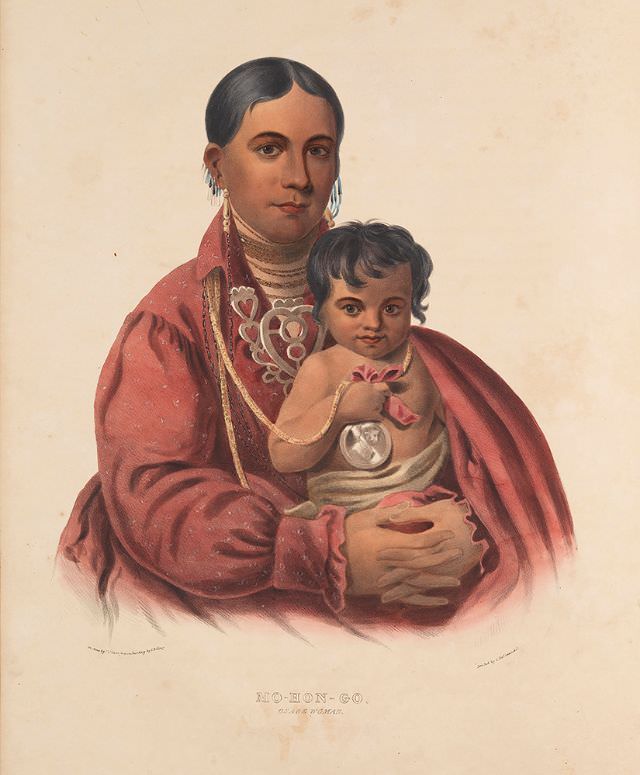
Mo-Hon-Go is portrayed with a steady, direct gaze, her dark hair neatly parted and drawn back as she cradles a small child against her chest. The artwork lingers on texture and ornament: a rich red garment, delicate earrings, and layered neck adornments that frame her face and emphasize the careful dignity of the pose. Even the soft, open background feels intentional, keeping attention on the sitter’s expression and the intimacy of the embrace.
In the child’s hands and across the woman’s clothing, bright details—ribbons, beadwork-like patterns, and a prominent circular pendant—become visual anchors that suggest status, identity, and personal history without a single spoken word. The composition balances tenderness with formality, as if the artist wanted to preserve both a familial bond and a public record. Small choices in color and shading heighten the sense of presence, making this feel less like a distant document and more like a lived moment.
For readers searching for Osage history, Native American portraiture, or early depictions of Indigenous women in American art, this image offers a compelling entry point. The title, “Mo-Hon-Go, Osage Woman,” foregrounds the sitter’s identity while reminding us how often Indigenous lives were filtered through outside eyes and artistic conventions. Seen today, it invites closer looking—at clothing and adornment, at maternal strength, and at the ways artworks can preserve culture while also reflecting the era that produced them.