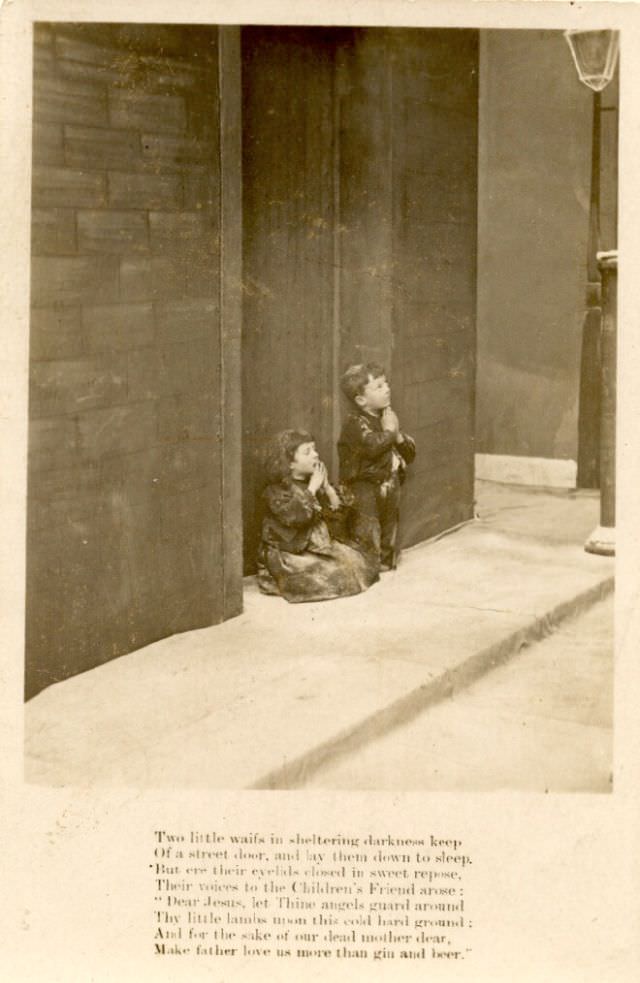
Near a heavy street door, two small children huddle in the narrow shelter where the wall meets the pavement, their bodies turned inward as if the doorway were the only warm place left. One sits close to the ground in a worn dress, the other stands beside her, both with hands raised in a posture that reads like prayer or pleading. The surrounding brick and timber dominate the frame, making the pair seem even smaller, while the open street edge hints at cold air and passing footsteps just beyond their refuge.
The title’s “two little waifs” aligns with the photograph’s quiet drama, and the old-fashioned caption printed beneath the image deepens that impression with the language of charity and angels. It’s a scene built on contrasts: a solid, built city offering a sliver of cover, and children dressed thinly enough that every crease and smudge becomes a detail worth noticing. Even if the moment was staged for a social message, the expressions and clasped hands still pull the viewer toward the human reality behind urban poverty.
For readers drawn to historical photography, street life, and early social reform imagery, this picture works as both document and moral appeal. The doorway becomes a symbol of the thin line between inside and outside, safety and exposure, belonging and abandonment. Look closely and you can almost hear the hush of the street, feel the roughness of the wall, and understand why such images circulated—to persuade, to unsettle, and to make hardship impossible to ignore.