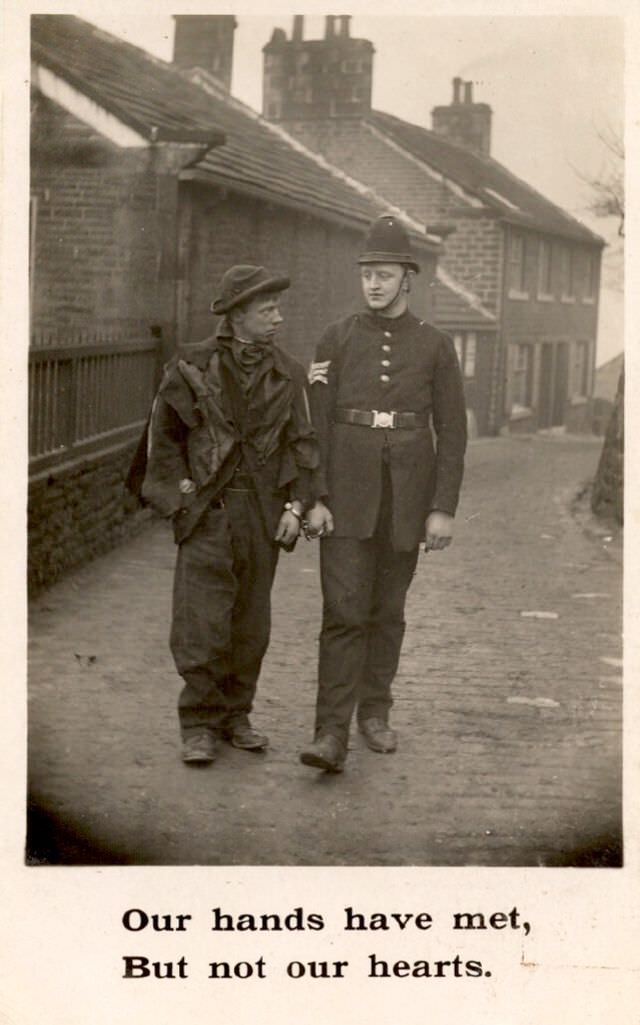
Along a narrow cobbled lane lined with brick cottages and tall chimney stacks, two men walk side by side in an uneasy sort of companionship. One wears a uniform with a helmet and a buttoned tunic, his posture official and controlled; the other, in worn work clothes and a soft cap, looks tired and rumpled, as if the day has already been long. Their hands are linked by necessity rather than affection, a small detail that gives the scene its bite.
“Our hands have met but not our heart” turns the moment into a dry, almost theatrical caption, the kind of period humor that lands because it’s rooted in everyday authority. The uniformed man’s grip at the other’s arm suggests escort or custody, yet the body language reads more resigned than dramatic—order maintained without warmth. It’s a snapshot of social distance made visible, where contact is forced while understanding remains miles away.
For readers drawn to historical street photography and old social history images, this photo offers a memorable mix of comedy and tension. The setting, the clothing, and the candid expressions evoke a working-class neighborhood and the routines of policing and public order, without needing a named place to feel specific. Funny on the surface and quietly telling underneath, it’s a reminder that the past often spoke in captions—witty, sharp, and uncomfortably honest.