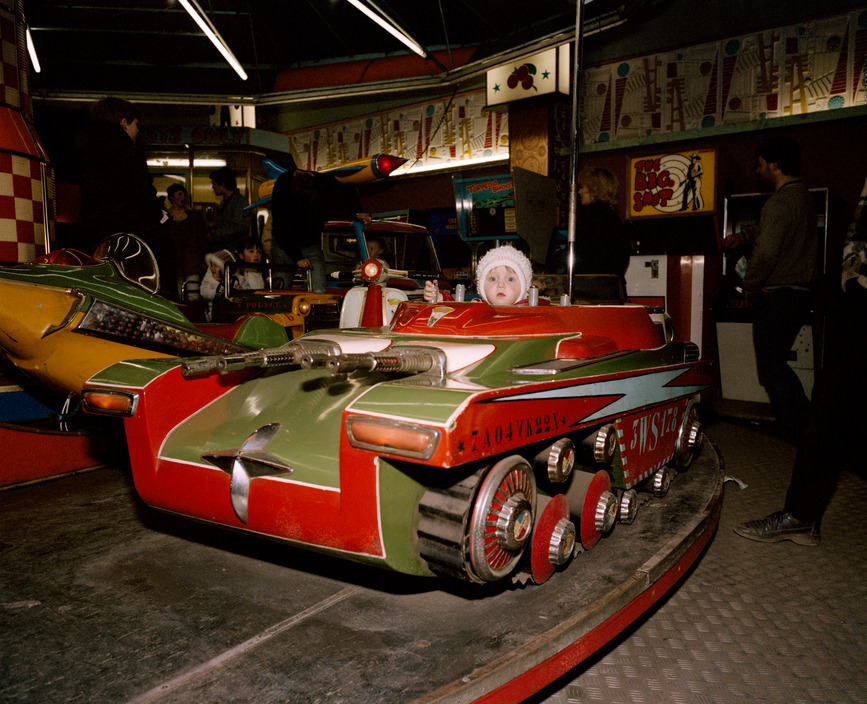
Inside a dim amusement hall at New Brighton, the bright paint and scuffed metal of a space‑age ride cut through the gloom, all reds, greens, and chrome details that look loved rather than preserved. A bundled-up child sits high in the little vehicle, framed by fluorescent strip lights and the busy clutter of arcade machines behind. It’s the seaside resort experience in miniature: warm indoors, noisy, and only a few steps away from the wind off the water.
Holidaymaking here feels practical and familiar, the kind shaped by modest budgets and a determination to squeeze joy from whatever was to hand. The ride’s chipped edges and worn platform suggest countless turns taken by families who returned season after season, while adults linger nearby in coats, watching and waiting, part chaperone and part audience. New Brighton in the 1980s wasn’t about gloss; it was about shared routines, cheap thrills, and small treats that still felt special.
Gritty photos like this one tell a broader story of British working-class leisure, when seaside towns offered escape without the need for distance or luxury. The mix of neon signage, crowded interiors, and utilitarian flooring evokes an era when entertainment was tactile and communal—coins dropped, machines whirring, lights flickering, and laughter bouncing off low ceilings. For anyone searching New Brighton history, 1980s seaside resort photography, or the everyday texture of coastal holidays, this image is a vivid reminder of how people made memories in the margins of ordinary life.