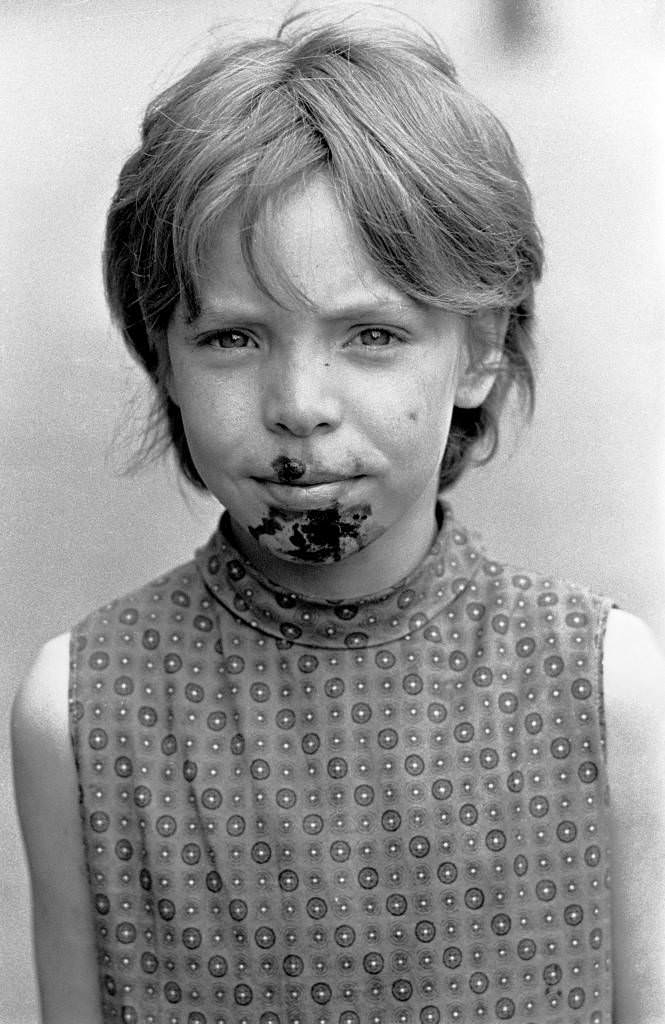
A child faces the camera in a tightly framed portrait, hair falling loosely and eyes steady, as the marks of impetigo are visible around the mouth and chin. The patterned sleeveless dress and plain, soft-focus background keep attention on the expression—quietly resilient, slightly wary—inviting the viewer to pause on the human cost behind a clinical term. It’s an unvarnished record of everyday life, where illness isn’t abstract but written on the skin.
Winson Green in 1971 sits behind the title like a postcode for a wider story: housing conditions, sanitation, and the stubborn presence of foul drainage in some streets and courtyards. Impetigo, a common and highly contagious skin infection, often flourished where damp, overcrowding, and poor waste disposal made hygiene a daily challenge rather than a simple choice. The photograph therefore works on two levels, offering both a personal moment and a piece of social history rooted in public health.
Places & People is an apt lens for this image, because it links a single childhood face to the environment that shaped it. For readers searching local history of Winson Green, Birmingham, or the lived realities of 1970s urban Britain, this post underscores how infrastructure and poverty could manifest in immediate, visible ways. The portrait remains dignified and direct, reminding us that reform is never just about pipes and policy—it is, always, about families.