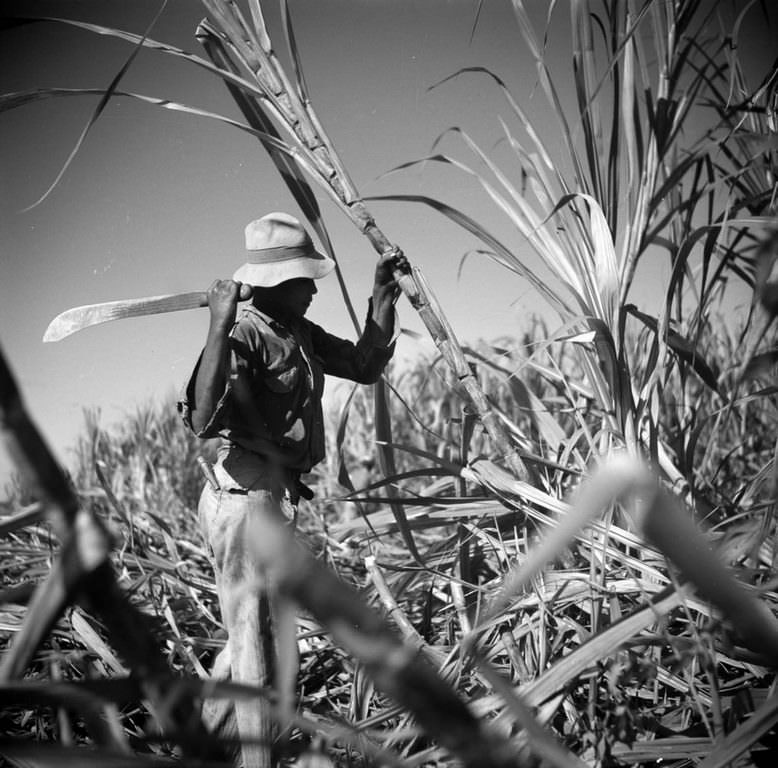
Among the tall, blade-like leaves of a sugarcane field, a lone worker pauses mid-motion with a machete balanced across his shoulder, the brim of his hat cutting a clean silhouette against the open sky. The photograph draws the eye to the raw materials of plantation agriculture—thick stalks, scattered cuttings, and the dense, tangled rows that turn harvesting into a physical contest with the crop itself. In the foreground, blurred cane and leaves frame the scene, emphasizing how easily a person can disappear into the work.
His stance suggests practiced rhythm: one hand gripping cane, the other ready to bring steel down where the stalk meets the ground. Sugarcane cutting demanded speed and stamina, but also care—sharp tools, fibrous plants, and harsh sun left little room for error. Even without faces or labels, the image speaks clearly about labor, skill, and the everyday intensity of agricultural work on a plantation.
Viewed today, this historical photo becomes a quiet entry point into the wider story of sugar production and the people who made it possible. The cane that dominates the frame hints at the global economy behind it, while the solitary figure reminds us that “places and people” are inseparable in rural history. For readers searching for plantation life, sugarcane harvesting, or the history of farm labor, the scene offers an honest, grounded glimpse of work at field level.