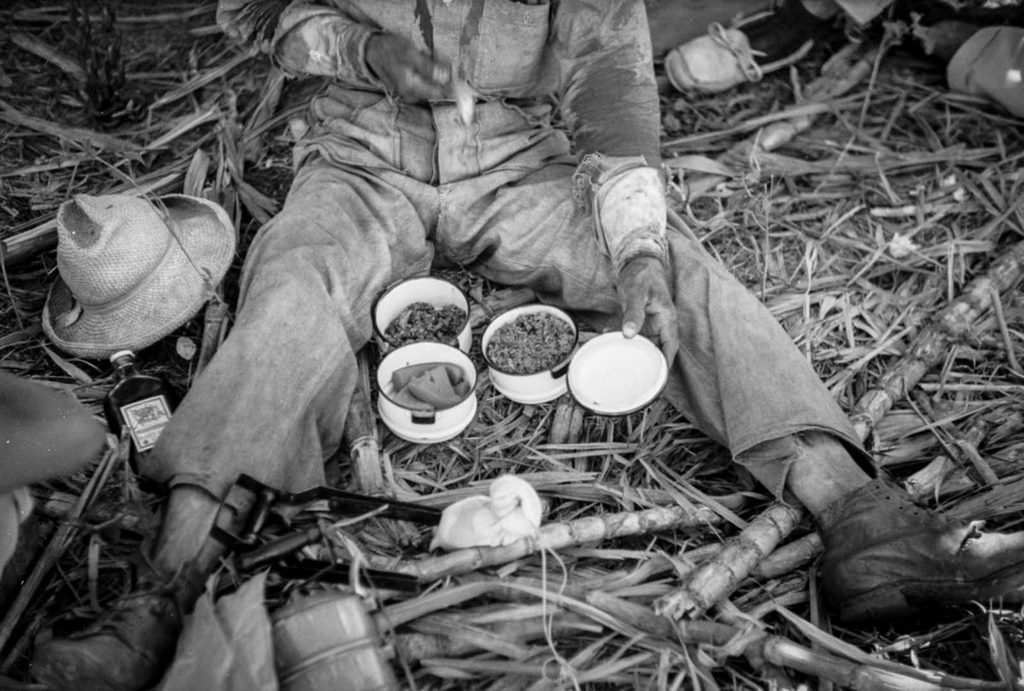
Between cut cane and scattered leaves, a plantation worker sinks to the ground for a brief, practical meal: rice, beans, and papaya arranged in simple bowls. The camera frames the scene from above, keeping the person’s face out of view and drawing attention instead to worn clothing, sturdy boots, and hands busy with food. That choice of angle turns lunch into a document of labor—how the day is organized around a few essential minutes of rest.
Details on the ground tell their own story about sugar plantation life. A straw hat lies nearby, tools and containers mingle with the debris of the harvest, and the improvised “table” is whatever dry patch can be found amid the stalks. The textures—fibrous cane, creased fabric, enamel dishes—suggest work that is repetitive, physical, and tied closely to the rhythms of agriculture.
For readers interested in social history, this photograph offers more than a menu; it hints at diets, routines, and resilience in plantation economies. Rice and beans speak to filling staples, while papaya adds a note of local fruit and seasonal availability. As a Places & People moment, it preserves the quiet interlude that makes the larger story of sugar production feel immediate and human.