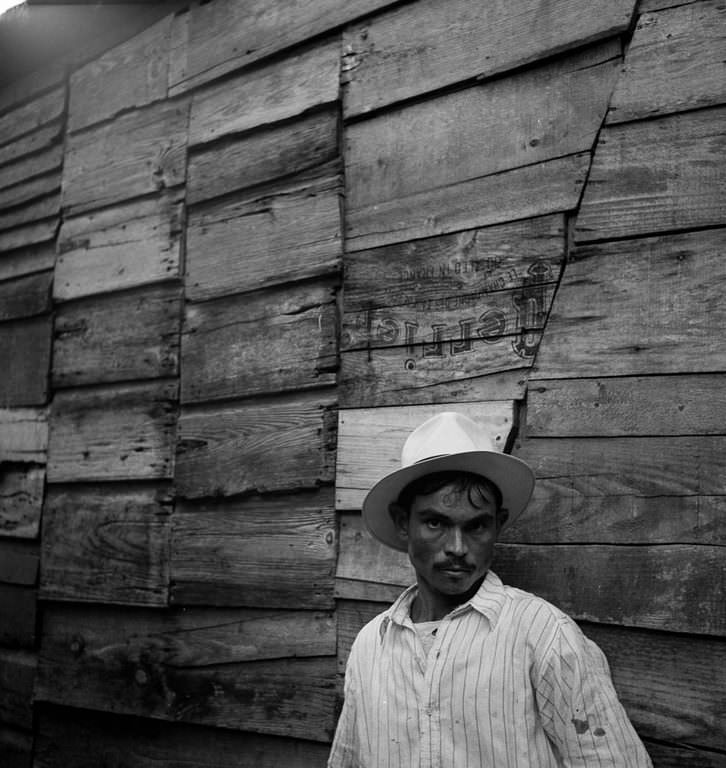
A patched wall of rough wooden boards fills the frame, its mismatched planks laid like a quilt of necessity. Against that weathered backdrop stands a man in a light shirt and brimmed hat, his gaze direct and unguarded, as if meeting the viewer on equal terms. The stark contrast between fabric and timber draws attention to small details—creases, shadows, nail marks—that quietly speak to daily life in a slum area of Utuado.
His posture suggests both fatigue and composure, the kind of stillness that comes from being accustomed to hard circumstances without surrendering dignity. The improvised construction behind him hints at crowded living conditions and scarce resources, where repairs are made with whatever can be found and nothing is wasted. In portraits like this, the environment is more than scenery; it becomes evidence of how people built shelter and identity under pressure.
For readers interested in Puerto Rico history, places and people, and the social landscapes of Utuado, this photograph offers a grounded, intimate perspective. It invites questions about labor, housing, and migration within the island, while keeping the focus on a single individual rather than statistics. As a historical photo for archival storytelling, it preserves a moment that is ordinary on the surface yet rich with context for anyone tracing the textures of community life.