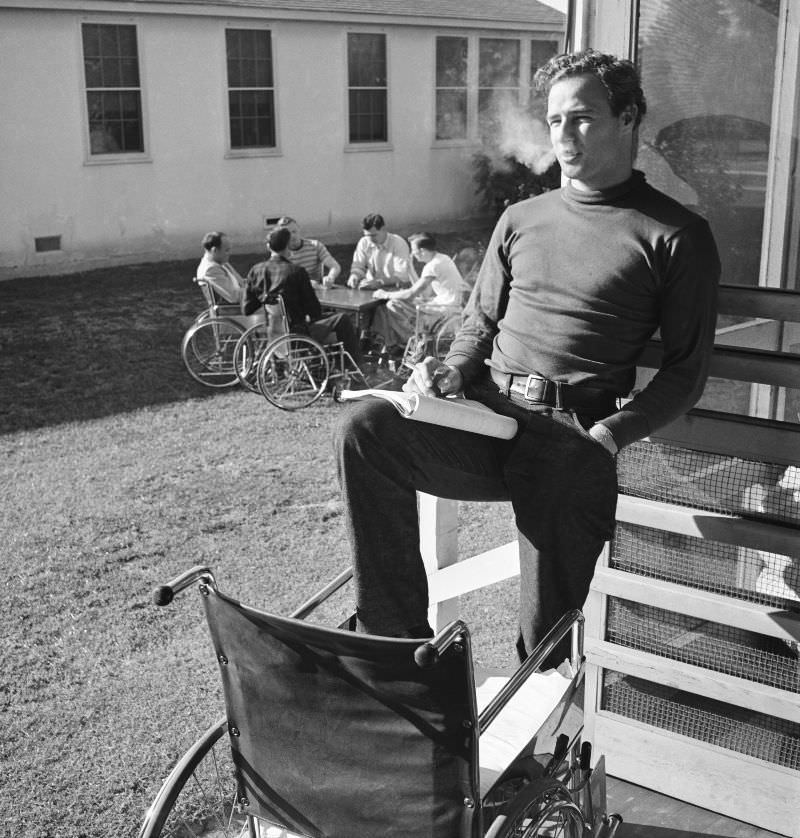
Leaning against the sunlit porch rail at the Birmingham Veterans Administration Hospital in Van Nuys, Marlon Brando pauses with a cigarette and a script page in hand, caught between rehearsal and reflection. The setting is plain and institutional—long windows, trimmed lawn, hard midday light—yet the mood is intimate, as if the camera has wandered into a private moment of preparation for *The Men*. It’s a candid glimpse of a young actor shaping a performance before the era of carefully managed publicity stills.
Behind him, a small circle of veterans sits around a table, absorbed in a card game, several in wheelchairs, their easy camaraderie contrasting with the gravity that brought them there. That background detail does more than fill the frame; it underscores the title’s point about “real-life inspirations,” placing lived experience alongside a Hollywood production. The photograph quietly suggests how postwar America’s hospitals and recovery wards became unlikely classrooms for filmmakers seeking authenticity.
For readers interested in classic cinema history, Marlon Brando, and the making of *The Men*, this 1949 hospital scene offers a powerful reminder of what “research” looked like when actors and crews stepped into real environments. The composition frames Brando close and dominant in the foreground while the veterans remain present and unmistakable, anchoring the image in community rather than celebrity. It’s a piece of movie and TV history that also works as social history—one candid moment where performance, rehabilitation, and everyday life share the same porch.