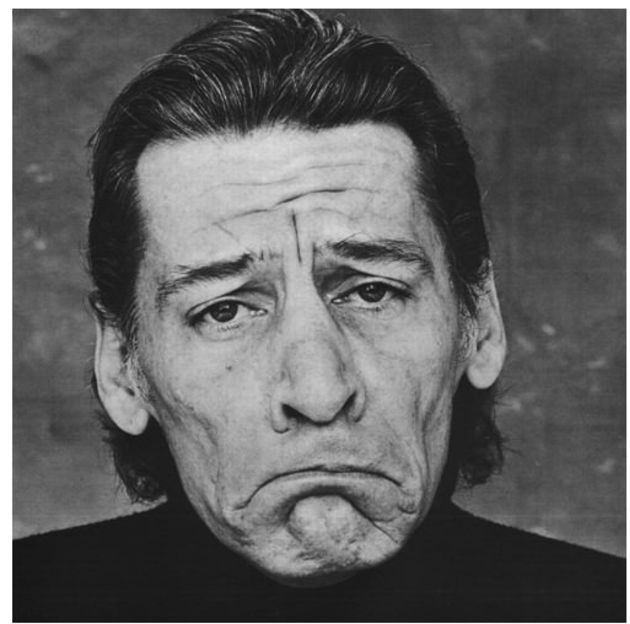
A face fills the frame, pulled into an exaggerated frown that reads as both sorrowful and strangely theatrical. The stark black-and-white tones emphasize every crease across the brow and around the mouth, turning expression into landscape. With no distracting props or scenery, the viewer is left alone with the quiet weight of a single mood: “Sad.”
Look closer and the emotion starts to feel layered, not merely miserable but performative—like a silent-film gesture held a beat too long. The plain backdrop and tight crop suggest a studio portrait or publicity-style shot, where lighting and focus were used to make feeling legible at a glance. Even without a captioned date or place, the photograph carries that older visual language of expressive faces meant to communicate instantly.
“Funny” might be the shortest way to describe it, and it fits—because the melodrama of the pout invites a half-smile even as it insists on heartbreak. That tension is what makes this historical photo linger: sadness rendered so boldly it circles back into humor, as if the camera caught someone acting out grief for an unseen audience. For readers drawn to vintage portraits, expressive photography, or the history of visual storytelling, this post offers a small, unforgettable study in emotion.