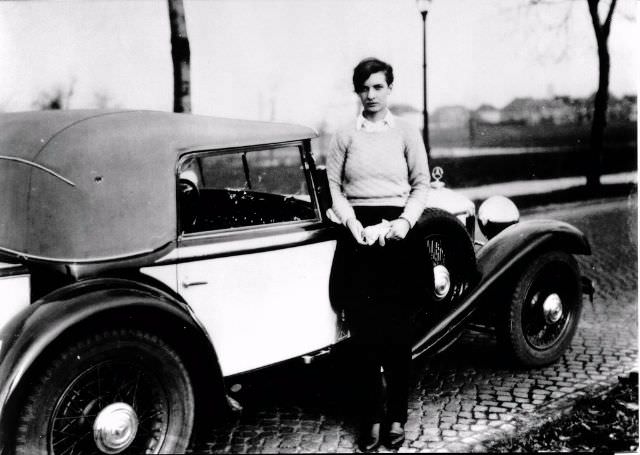
Leaning against a streamlined open-top automobile, a young woman meets the camera with a calm, self-possessed stare, dressed in a practical knit sweater and dark trousers that read unmistakably “tomboy” for the 1930s. Her short, side-parted hair and minimal fuss signal a mood of modern confidence, while the cobbled road and bare trees set a crisp, outdoorsy backdrop that fits the era’s growing taste for speed, sport, and mobility. The whole scene feels less like a posed society portrait and more like a snapshot of independence in motion.
Tomboy styles of the 1930s weren’t about abandoning femininity so much as renegotiating it—choosing comfort, utility, and a sharper silhouette when the moment called for it. Trousers paired with simple tops, flat shoes, and unfussy grooming offered a rebellious edge that still looked polished, especially beside new symbols of modern life like the motorcar. In fashion and culture terms, this look hints at women claiming space in public, experimenting with dress codes, and embracing a more active everyday identity.
For readers exploring women’s fashion history, this photo is a compact lesson in how style changes travel through ordinary choices: what you wear to drive, to walk, to be seen. The tomboy aesthetic—clean lines, pared-down accessories, and an attitude that prioritizes ease—echoes through decades of street style and contemporary tailoring. If you’re searching for 1930s fashion inspiration or the roots of androgynous dressing, this candid moment captures the era’s sharp, modern edge without needing a single word of explanation.