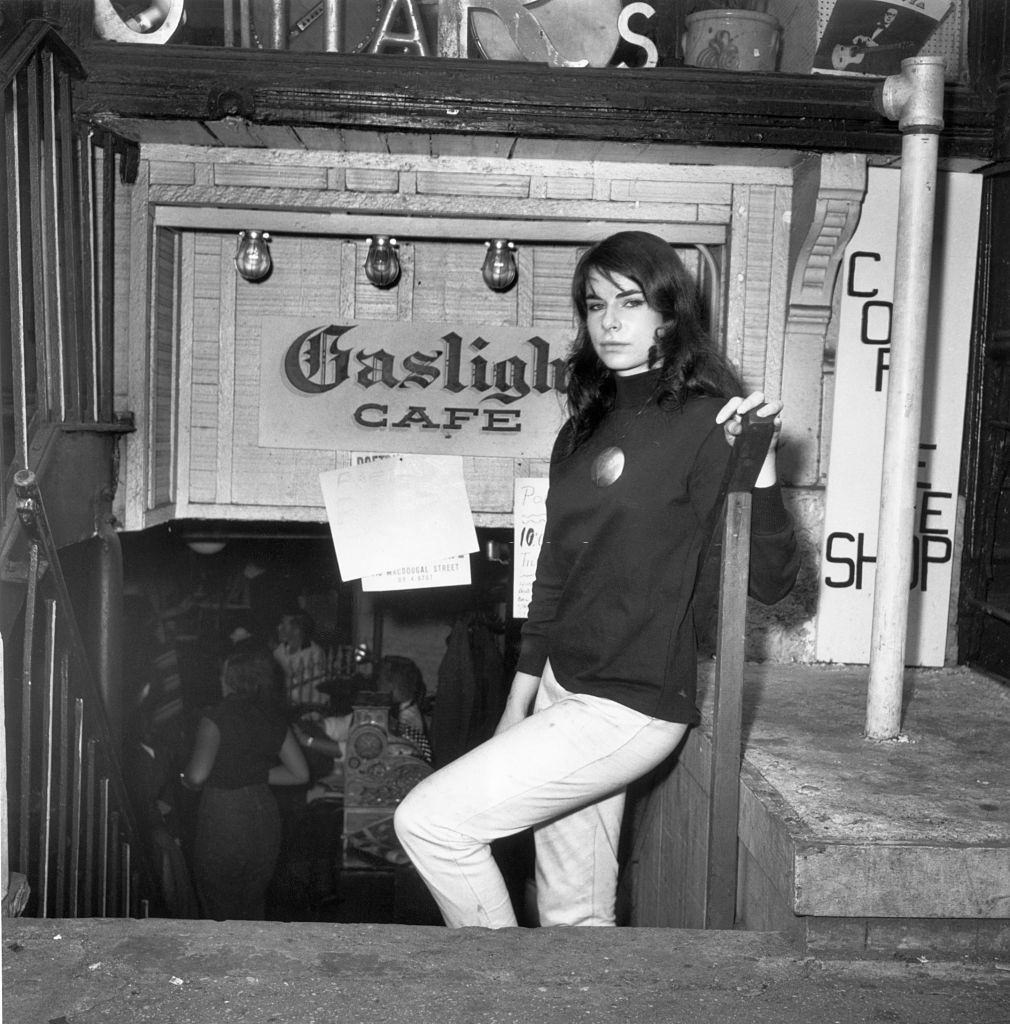
Down a narrow stairway, the sign for the Gaslight Cafe anchors this 1959 glimpse of Greenwich Village’s after-hours world. A young woman pauses at the entrance, cigarette in hand, framed by rough brick, exposed pipes, and hand-lettered notices that hint at the night’s offerings. Below her, the room recedes into a blur of bodies and tables, suggesting the low-ceilinged intimacy that made Village coffee shops feel like private stages.
The Beat era wasn’t only about books and big ideas; it lived in cramped basements where conversation, music, and smoke braided together into a scene. Details like the worn steps, the clustered patrons, and the casually confident pose at the doorway evoke a place where poets, listeners, and late-night regulars could mingle without pretense. Even without hearing a single chord or line of verse, the photograph carries the hum of a room built for performance and debate.
Greenwich Village coffeehouse culture proved essential to New York City’s mid-century counterculture, offering affordable refuge and an audience for new voices. Images like this help map the geography of bohemia—less a single landmark than a network of doorways, stairwells, and small rooms that amplified creativity. For anyone searching the history of beatniks, the Gaslight Cafe, or Village nightlife in 1959, this candid moment captures the atmosphere that made the neighborhood legendary.