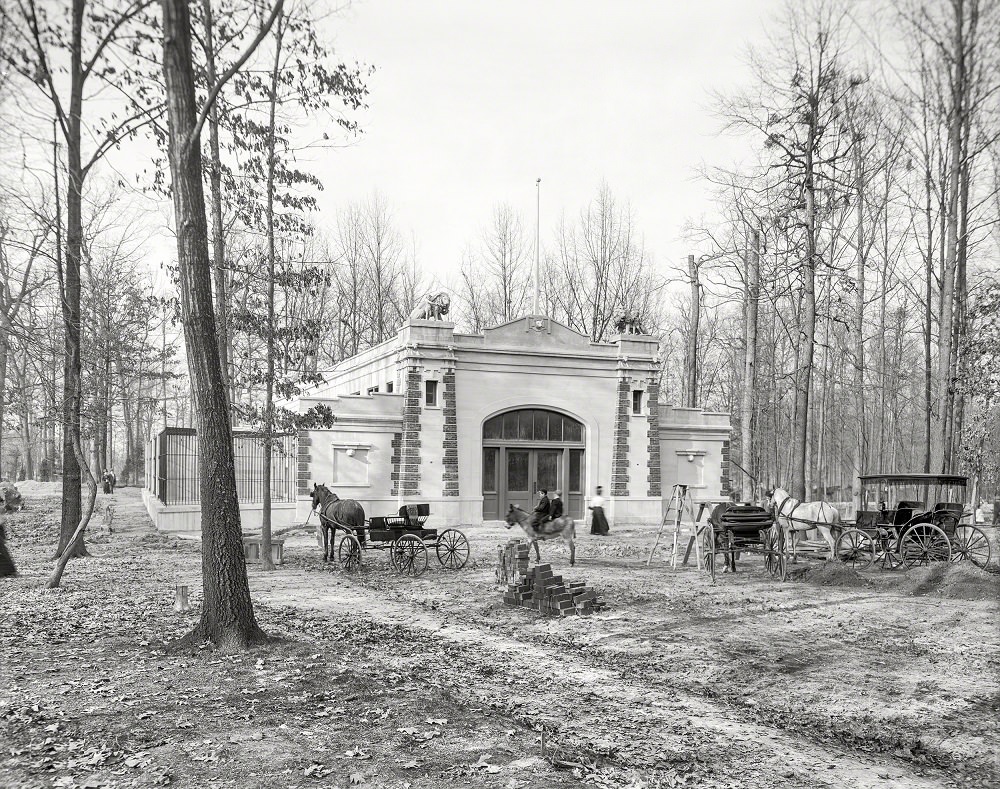
Rising from a clearing of bare trees, the Lion House of the Carnivora Building at Overton Park Zoo stands with a confident, almost civic presence—arched entrance centered like a courthouse door, low wings stretching outward, and decorative masonry details catching the light. The scene feels new and in-progress, with disturbed ground and scattered materials emphasizing that this was an evolving public attraction rather than a finished postcard moment. Even at a distance, the structure reads as purpose-built for spectacle and education, a hallmark of early 20th-century zoo design in Memphis.
Along the front approach, everyday movement animates the setting: horse-drawn vehicles wait near the entrance while a few figures pass by, bundled for cool weather. A small stack of bricks and a ladder hint at ongoing work, suggesting maintenance or final touches as the park takes shape around the building. The surrounding woodland, still leafless, frames the zoo architecture and reminds viewers that Overton Park was as much a landscaped retreat as it was a destination for animal exhibits.
For anyone exploring Memphis history, Overton Park Zoo history, or early American zoo architecture, this 1910 view offers a grounded look at how “modern” leisure spaces were built and used. It captures the transitional world between animal-house grandeur and the practical logistics of carts, labor, and park pathways. The Lion House stands at the center of that story—an emblem of civic pride, public entertainment, and the changing relationship between city life and the natural world.